
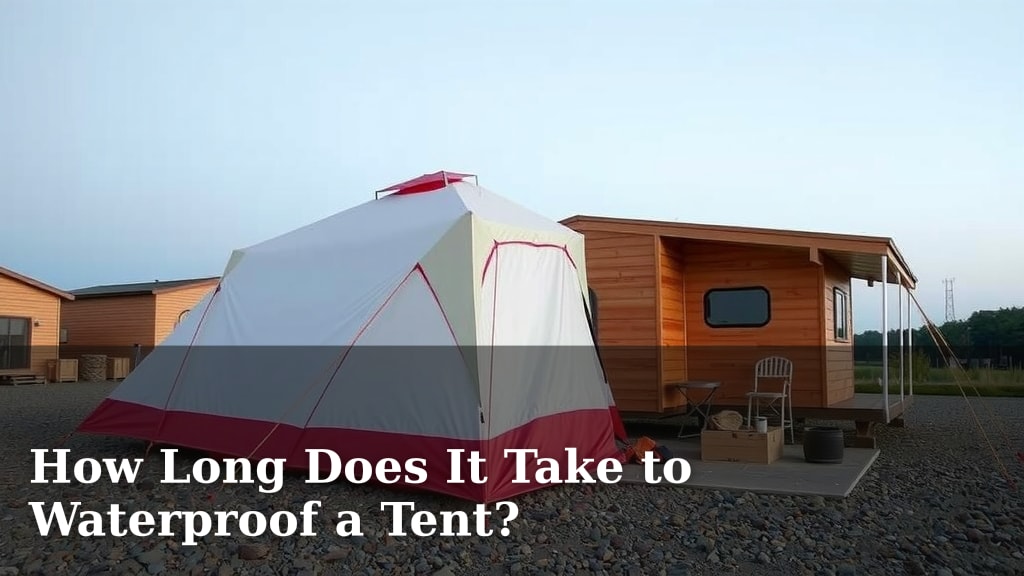
How Long Does It Take to Waterproof a Tent?
Waterproofing a tent generally takes between 1 to 3 hours. This timeframe can vary depending on the tent’s size and the specific waterproofing treatment you choose. Factors like drying time will also affect the total duration. We found that most DIY waterproofing jobs fall within this range.
This process involves more than just spraying on a sealant. You’ll need to prepare the tent properly, apply the treatment evenly, and allow sufficient drying time. Getting your tent ready for the elements ensures a better seal. We’ve seen that a well-waterproofed tent makes all the difference on your adventures.
- Waterproofing typically takes 1-3 hours.
- Tent size and treatment type affect the time.
- Proper preparation is key for best results.
- Drying time adds to the overall duration.
Let’s break down the steps involved in waterproofing your tent so you can get it ready for your next trip.
“`htmlUnderstanding the Tent Waterproofing Timeline
So, you’re wondering how long it’ll take to get your tent ready for the elements. It’s a common question, and honestly, there’s no single magic number. We’ve found that most DIY waterproofing jobs for tents fall into the 1 to 3 hour range. This is the active time you’ll spend working on your tent, not including drying.
Think of it like painting a room. You have to prep the walls, do the actual painting, and then let it dry. Waterproofing your tent is similar. The size of your tent and the type of waterproofing treatment you select are the biggest factors. A small backpacking tent will be quicker than a large family cabin tent, naturally.
Factors That Influence Your Waterproofing Time
Several things can speed up or slow down your waterproofing project. It’s good to know these ahead of time so you can plan accordingly. This way, you won’t be caught off guard when you’re rushing to pack for a trip.
Tent Size and Material
A bigger tent means more surface area to cover. A two-person backpacking tent might take about an hour to spray down. A six-person family tent could easily take two hours or more. The material also plays a small role. Some fabrics absorb the sealant more readily, requiring a bit more product and time. We found that thicker materials might need a slightly longer application time for even coverage.
Type of Waterproofing Treatment
There are a few main types of waterproofing treatments you can use. Each has its own application process, affecting the total time. Most commonly, people use spray-on sealants or wash-in treatments.
Spray-On Sealants
These are super popular for their ease of use. You simply spray them onto the fabric. This method is generally the quickest, often taking about 30 minutes to an hour for a standard tent. You’ll want to do this outdoors. Make sure you get even coverage, which might involve a second light coat.
Wash-In Treatments
These are added to your washing machine along with the tent. The actual “treatment” time is minimal, as the machine does most of the work. However, you’ll need to run a rinse cycle afterward to remove any residue. The main time consumer here is the machine’s cycle duration, which can add an hour or two.
Preparation and Drying Time
This is where you can really influence the overall timeline. Proper prep work is essential for a good seal. And then, of course, your tent needs to dry completely.
Preparation Steps
Before you start applying any waterproofing agent, your tent needs to be clean and dry. If it’s dirty, the sealant won’t bond properly. Washing your tent can add an hour or two, depending on how soiled it is and whether you hand wash or machine wash it. You also need to make sure it’s completely dry before applying the treatment. This can take several hours, or even overnight, depending on the weather.
Drying is Key!
After you’ve applied the waterproofing, your tent needs to dry. This is a passive process, but it’s critical. Most spray-on treatments require several hours of drying time, often 12-24 hours, before they are fully cured and effective. Wash-in treatments might be usable sooner after the machine cycle, but many manufacturers recommend air drying for best results. Always check the product’s instructions for specific drying times. Skipping this step means your waterproofing won’t last as long.
A Realistic Project Breakdown
Let’s walk through a typical scenario to give you a clearer picture of the time commitment. Imagine you’re waterproofing a medium-sized, 3-4 person tent using a spray-on sealant.
Here’s how the time might break down:
- Cleaning the Tent: If it’s not too dirty, a quick spot clean might take 15-20 minutes. If it needs a full wash, budget 1-2 hours.
- Drying After Washing: This can take 4-8 hours, or overnight, depending on your climate.
- Applying Waterproofing: Spraying evenly might take 45 minutes to 1 hour.
- Drying/Curing: This is the big one. Expect 12-24 hours for the sealant to fully cure.
So, while the active work might only be a couple of hours, the entire process from start to finish, including prep and drying, can easily span 24 to 48 hours. That’s why many people do this kind of maintenance a week or so before a camping trip.
What If You’re Rushing?
We get it. Sometimes you discover your tent isn’t as waterproof as you thought just days before your trip. In a pinch, you can skip the washing step if your tent is relatively clean. Focus solely on applying the waterproofing spray.
However, you must still allow for adequate drying and curing time. Rushing the curing process means the waterproofing agent won’t bond properly. This can lead to it washing off easily or not providing good protection. While you might shave off cleaning and drying time, you’re sacrificing the longevity and effectiveness of the treatment. We found that a properly cured tent offers much better water repellency (NCBI).
Checklist for Efficient Waterproofing
Want to make the process as smooth as possible? Keep these tips in mind:
- Gather all supplies before you start.
- Choose a well-ventilated area, preferably outdoors.
- Work in moderate temperatures – not too hot or too cold.
- Apply sealant in thin, even coats.
- Allow the recommended drying time – don’t rush it!
Conclusion
Waterproofing your tent is a straightforward process that typically demands 1 to 3 hours of your active time. Remember, this doesn’t include the essential drying and curing periods, which can extend the entire project to 24-48 hours. By understanding the factors like tent size, treatment type, and thorough preparation, you can accurately estimate the time needed. Don’t rush the drying; patience here ensures your tent will keep you dry on your next adventure.
Now that you know the timeline, gather your supplies and pick a good day. Your future self, snug and dry during a rainy campout, will thank you for taking the time to properly waterproof your tent.
Frequently Asked Questions
Can I waterproof my tent on the same day I plan to use it?
Generally, no. While the active application of waterproofing spray might only take an hour or two, most sealants require 12-24 hours to fully cure. Skipping this curing time means the waterproofing won’t be effective and won’t last, potentially leaving you wet.
What’s the biggest factor that affects waterproofing time?
The biggest factors are the size of your tent and the drying time required. Larger tents simply have more surface area to cover, and the curing process takes a fixed amount of time regardless of application speed.
How long does it take to clean a tent before waterproofing?
Cleaning time can vary greatly. A quick spot clean might only take 15-20 minutes. If your tent is quite dirty and needs a full wash, budget 1-2 hours for hand washing or machine washing, plus additional time for it to air dry completely before applying sealant.
Are wash-in tent waterproofing treatments faster than sprays?
The application itself for wash-in treatments is quick as the washing machine does the work. However, the total time includes the machine cycle (often 1-2 hours) and subsequent air drying. Spray-on sealants have a quicker application but a longer, separate curing time.
What if my tent is only slightly dirty? Can I skip cleaning?
If your tent is only lightly soiled, you might be able to skip a full wash and proceed with applying the waterproofing treatment. However, ensure you at least wipe down any dirt or grime. Proper adhesion is key, so a clean surface is always recommended for the best, longest-lasting results.
![7 Person Cot Tent [2026]](https://leonardhomeoutdoor.com/wp-content/uploads/2026/08/7-person-cot-tent-2026-featured-768x432.jpg)



![7 Mm Waterproof Tent [2026]](https://leonardhomeoutdoor.com/wp-content/uploads/2026/08/7-mm-waterproof-tent-2026-featured-768x432.jpg)