Blow Up Tent vs Pole Tent: Which Is Best for Camping
When choosing your next shelter, understanding the difference between a blow up tent and a pole tent is key. Blow up tents, also called inflatable tents, use air beams for structure and are generally quicker to set up, while traditional pole tents rely on poles and guy lines for stability. For most campers, the ease of setup often tips the scales toward inflatable models.
We’ve researched both types and found that while poles offer proven reliability, modern air beam technology has made inflatable tents a very strong contender for campers seeking speed and simplicity. You might be wondering which one is right for your camping style and budget. Many factors come into play, including wind resistance and pack-down time.
TL;DR:
- Blow up tents use air beams, pole tents use physical poles.
- Inflatable tents often set up faster.
- Pole tents can be more durable in high winds.
- Your camping needs will determine the best choice.
Let’s walk through the pros and cons of each so you can make the best decision for your adventures.
Choosing Between Air Beam and Traditional Pole Tents
When you’re planning your next camping trip, the shelter you choose can make a big difference. We’ve looked at two popular options: tents that inflate with air and those that use physical poles. Each has its own set of advantages. Your camping style and priorities will help you decide which one is the best fit for your adventures.
Understanding Inflatable (Air Beam) Tents
These tents, often called inflatable tents or blow-up tents, use air beams instead of traditional poles. You pump air into these beams, and they stiffen to create the tent’s structure. Think of them like a high-tech air mattress for your shelter’s frame.
The Setup Speed Advantage
One of the biggest draws of inflatable tents is their speedy setup. Many campers find they can have their tent pitched in just a few minutes. This is a huge plus after a long day of hiking or driving. You can get out of the elements quickly.
How They Work: The Air Beam System
Inside the tent fabric, you’ll find sealed tubes or “beams.” You connect a pump to a valve, and as you inflate it, the beams expand and hold their shape. This creates a sturdy frame. We found that most pumps included are manual, but electric pumps can speed things up even more.
Packing Down an Inflatable Tent
Packing down these tents is also surprisingly simple. You just need to deflate them by opening the valves. They then fold up fairly flat. The trick is to get as much air out as possible before rolling or folding. You might find it takes a couple of tries to get the perfect compact pack.
Pros of Inflatable Tents
- Fast setup and takedown: Often the quickest option available.
- Simple pitching: No fumbling with multiple poles.
- Good stability: Once inflated, the beams are quite rigid.
- Compact storage: They can deflate quite small.
Cons of Inflatable Tents
- Requires a pump: You need to carry an air pump.
- Puncture risk: Though rare, a puncture could deflate a beam.
- Price point: Can sometimes be more expensive than comparable pole tents.
- Repair kits: You might need patches for repairs on the go.
Exploring Traditional Pole Tents
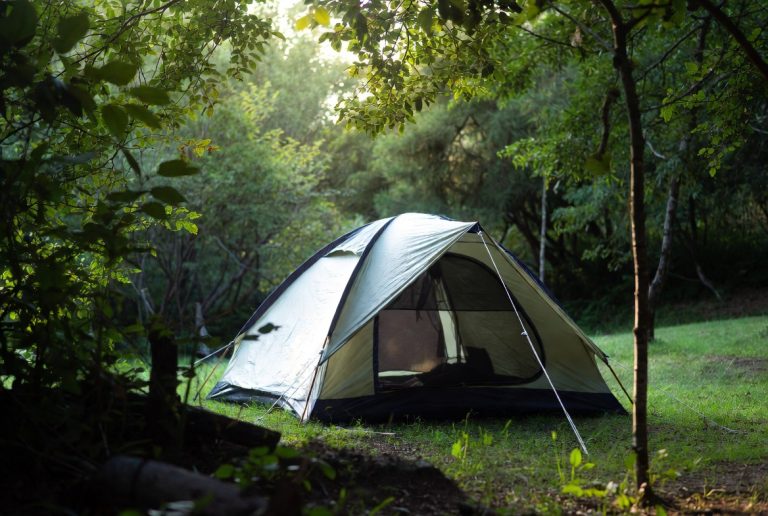
These are the tents most people picture when they think of camping. They rely on physical poles that you connect together. These poles slide through sleeves or attach to clips on the tent fabric. Guy lines are essential for stability.
The Reliability of Poles
Pole tents have been around for a long time. They are known for their proven reliability. The materials and construction are well-understood by campers. You know what you’re getting with a traditional pole tent.
Setup Process for Pole Tents
Setting up a pole tent typically involves assembling the poles and then threading them through the tent’s sleeves or attaching them. After the poles are in place, you stake out the tent and attach guy lines. This process can take longer, especially for larger tents or in windy conditions. You might need a friend to help.
Wind Resistance and Durability
Many experts say that well-pitched pole tents, with their extensive use of guy lines, can offer excellent wind resistance. The flexibility of the poles can help them bend rather than break in strong gusts. This makes them a solid choice for exposed campsites.
Pros of Pole Tents
- Durability: Often built with robust materials.
- Excellent wind stability: When properly guyed out.
- No pump needed: Just poles and stakes.
- Wide variety: Available in many shapes, sizes, and price points.
Cons of Pole Tents
- Slower setup: Can take more time and effort.
- Pole management: Assembling and organizing poles can be fiddly.
- Bulkier pack: Poles can add weight and volume.
- Potential for broken poles: Though materials are strong, poles can snap.
Key Comparison: What to Consider
Deciding between these two types comes down to what matters most to you. We’ve put together a simple table to help you compare.
| Feature | Inflatable Tent | Pole Tent |
|---|---|---|
| Setup Time | Very Fast | Moderate to Slow |
| Ease of Setup | Very Easy (requires pumping) | Moderate (requires pole assembly) |
| Wind Resistance | Good to Very Good | Very Good to Excellent (when guyed out) |
| Pack Size | Compact (deflated) | Can be Bulkier (poles) |
| Durability | Good (air beam integrity) | Excellent (materials, proven design) |
| Cost | Can be Higher | Wide Range, often lower for basic models |
| Maintenance | Patch kit, pump care | Pole repair, fabric care |
Your Camping Priorities Checklist
To help you make the right choice, ask yourself these questions:
- Do you value setting up camp quickly above all else?
- Are you often camping alone and need a one-person setup?
- Do you frequently camp in areas known for strong winds?
- Is minimizing pack weight and size a top concern?
- What is your budget for a new tent?
- How much effort are you willing to put into setup after a long day?
Conclusion
Deciding between an inflatable and a pole tent boils down to your personal camping style and priorities. If speed and ease of setup are your top concerns, an inflatable tent is likely your best bet. You’ll be relaxing in no time. However, if you prioritize proven durability and superior wind resistance, especially in challenging conditions, a traditional pole tent remains a reliable choice. Consider your typical camping environment and how much effort you want to put into setup after a long day. Weigh these factors carefully, and you’ll find the perfect shelter for your next outdoor adventure.
Frequently Asked Questions
Can inflatable tents withstand strong winds better than pole tents?
Generally, well-pitched pole tents with ample guy lines offer superior wind resistance. The flexibility of poles and numerous anchor points allow them to better absorb wind forces. While inflatable tents are stable, they may not perform as well in extreme gusts compared to a properly set up pole tent.
What happens if an inflatable tent gets a puncture?
Most inflatable tents are constructed with multiple air beams, so a single puncture usually won’t cause a complete collapse. They often come with repair kits for patching. For more significant damage, you might need to contact the manufacturer for specialized repair services or replacement parts.
Are pole tents more durable over the long term?
Pole tents have a long track record of durability, with well-understood materials and construction methods. While poles can potentially break, they are often replaceable. Inflatable tents’ long-term durability depends on the quality of the air beams and fabric, and the care taken to avoid punctures.
Which type of tent is generally lighter to carry?
This can vary, but often inflatable tents, once deflated, can pack down quite small and light, especially smaller models. However, the weight of the air pump needs to be factored in. Pole tents can be bulkier due to the poles, but often the individual components are relatively light.
Is a specific type of pump needed for inflatable tents?
Yes, you will need an air pump, typically a manual foot or hand pump, which is usually included with the tent. Electric pumps are also available and can significantly speed up the inflation process, but they require a power source like a car battery or portable power station.
![7 Best Tent For Ac [2026]](https://leonardhomeoutdoor.com/wp-content/uploads/2026/09/7-best-tent-for-ac-2026-featured-768x432.jpg)