
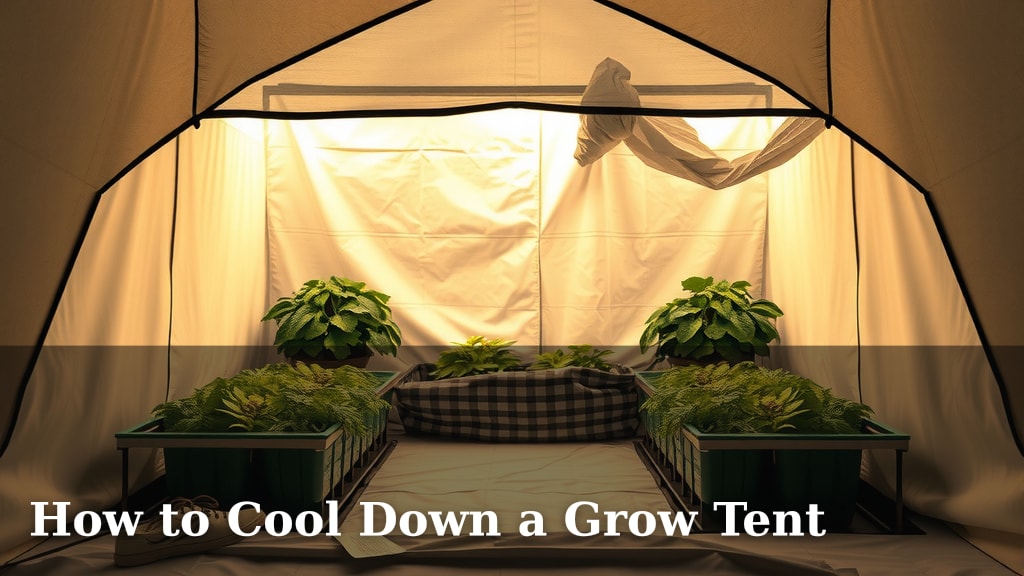
How to Cool Down a Grow Tent
The easiest way to cool down a grow tent is by managing your airflow and ventilation. You can achieve this by using exhaust fans, intake fans, and ensuring proper ducting. This helps remove hot air and brings in cooler, fresh air, which is essential for plant health.
When grow tent temperatures climb too high, your plants can suffer. Heat stress can lead to stunted growth and lower yields. Thankfully, several effective methods exist to keep your tent at an ideal temperature range. We’ve researched various techniques to help you maintain the perfect climate.
- Use exhaust fans to vent hot air.
- Install intake fans for fresh air circulation.
- Consider ducting for better air movement.
- Adjust fan speeds based on temperature readings.
- Look into clip-on fans for internal airflow.
Let’s walk through exactly how to implement these cooling strategies step by step to keep your grow tent happy and your plants thriving.
Taming the Heat: Your Guide to a Cooler Grow Tent
High temperatures in your grow tent can really stress out your plants. It’s like trying to work out on a scorching summer day without any water! This heat can stunt growth, cause nutrient problems, and drastically reduce your harvest. But don’t sweat it! There are smart, simple ways to keep your tent comfortably cool, ensuring your plants are happy and healthy. We’ve looked into the best methods to help you maintain that sweet spot temperature.
Understanding the Root Cause of Grow Tent Heat
Before we dive into solutions, let’s quickly touch on why your grow tent might be getting so warm. Often, the heat comes from your grow lights. LED, HPS, and MH lights all produce significant heat. Add to that the heat generated by fans, pumps, and even the electricity running everything, and you’ve got a recipe for a mini-sauna. Without proper airflow, this heat just builds up, creating a hostile environment for your leafy friends.
The Role of Lighting in Tent Temperatures
Your lights are usually the biggest heat contributors. LEDs are generally cooler than older lighting technologies like HPS or MH lamps. However, even powerful LEDs can warm up a small space considerably. If you’re using older, high-heat bulbs, you might need a more robust cooling system. Consider the wattage and type of lights you’re using, as this will be a major factor in your cooling strategy.
Equipment Heat and Electrical Load
Beyond lights, other equipment plays a role. Your circulation fans, exhaust fans, dehumidifiers, and even the electrical ballast for your lights all generate some heat. While individually they might not seem like much, collectively they add to the overall temperature. Keeping these components running efficiently can help minimize their heat output.
Mastering Airflow: The Foundation of Coolness
Effective airflow is the single most important factor in keeping your grow tent cool. You need to constantly remove the hot, stale air and replace it with fresh, cooler air from outside your tent. This isn’t just about fans; it’s about a balanced system working together.
Harnessing the Power of Exhaust Fans
An exhaust fan is your tent’s lungs. Its job is to pull the hot air out of the tent and expel it, usually through a duct. The size of the fan you need depends on the size of your tent. A general rule of thumb is to choose a fan that can exchange the entire volume of air in your tent at least once every minute. This ensures no stale, hot air lingers for too long.
Many growers find that inline duct fans are the most efficient for this purpose. They mount directly into your ducting and are designed for continuous operation. Ensure your exhaust fan is powerful enough for your tent’s cubic footage. You can calculate this by multiplying the length, width, and height of your tent (in feet) to get cubic feet, and then ensuring your fan’s CFM (cubic feet per minute) rating is at least equal to this number. Many experts suggest aiming for 1.5 to 2 times the tent volume for optimal results (GrowTentGuides.com).
Inviting Fresh Air with Intake Fans
While the exhaust fan pushes hot air out, you need a way for cooler air to come in. This is where intake fans come in. You can use a passive intake, which relies on negative pressure created by the exhaust fan to pull air in through vents. Or, you can use an active intake fan to force fresh air in. An active intake fan can help maintain positive pressure, which can sometimes be beneficial for preventing pests.
If you opt for an active intake, position it opposite your exhaust fan. This creates a cross-breeze that helps circulate air throughout the tent. Just like with exhaust fans, ensure your intake fan is sized appropriately. It doesn’t need to be as powerful as your exhaust fan, but it should be substantial enough to prevent the tent from collapsing inward due to negative pressure.
The Importance of Ducting and Air Movement
Simply having fans isn’t enough; how you manage the air is key. Ducting is crucial for directing where your air goes. For exhaust, you want to vent the hot air outside your grow space. For intake, you might want to pull air from a cooler part of your room or even from outside if your ambient environment is cooler. Properly sealed ducting prevents air leaks, ensuring your fans work efficiently.
Internal air circulation is also vital. This is where clip-on fans or oscillating fans come into play. These fans don’t exhaust air; they simply move it around inside the tent. This helps prevent hot spots from forming around your lights and ensures that CO2 is distributed evenly to your plants’ leaves. Good air movement also strengthens your plants’ stems and helps prevent mold and mildew issues.
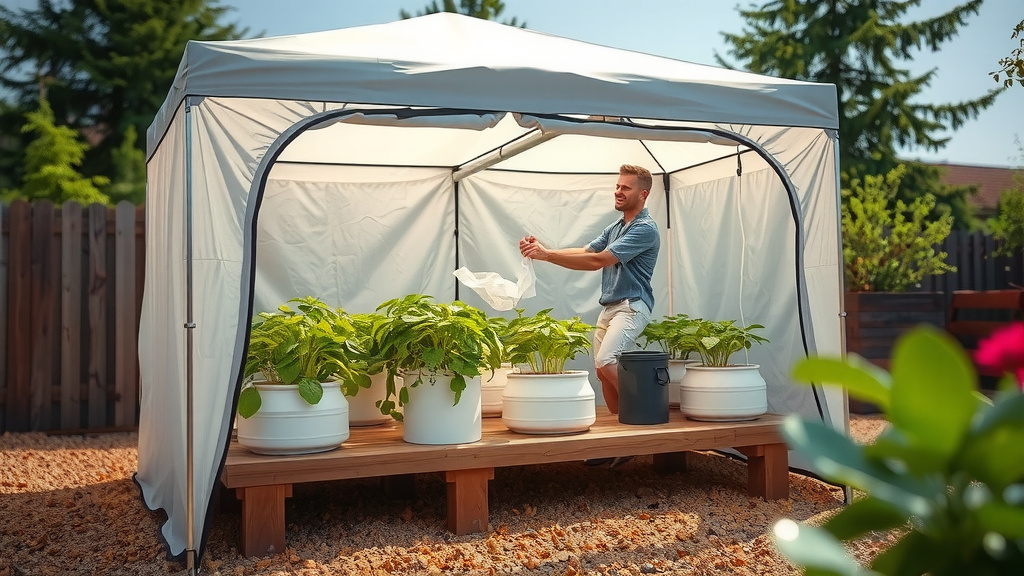
Temperature Control Tools: Your Cooling Allies
To truly master your grow tent’s climate, you need the right tools to monitor and control it. These devices help you understand what’s happening and make adjustments automatically.
Thermostats and Hygrometers: The Essential Duo
You can’t manage what you don’t measure. A good digital thermometer and hygrometer (which measures humidity) is non-negotiable. Place it at plant canopy level, not near the top or bottom of the tent, to get an accurate reading of the conditions your plants are experiencing. Many units combine both functions, making them convenient and affordable.
Fan Controllers for Smart Ventilation
For advanced temperature management, consider a fan controller. These devices connect to your exhaust fan and can automatically adjust its speed based on the temperature you set. When the temperature rises above your set point, the fan speeds up to remove more hot air. When it cools down, the fan slows down. This saves energy and keeps your environment much more stable. Many advanced controllers also monitor humidity and can control intake fans.
We found that using a controller with a temperature probe placed at canopy level provides the most consistent results. This ensures the fan reacts to the actual conditions your plants are feeling, not just the ambient temperature at the top of the tent. This is a game-changer for maintaining optimal conditions day and night.
Additional Strategies for a Cooler Tent
Sometimes, even with great airflow, you might need a little extra help keeping temperatures down. These supplementary methods can make a big difference.
Light Management and Heat Reduction
Consider the type and placement of your lights. If possible, switch to more energy-efficient LED grow lights, as they produce significantly less heat than older technologies like Metal Halide (MH) or High-Pressure Sodium (HPS) lamps. Ensure your lights aren’t too close to your plants. Raising your lights can reduce the heat load directly on the canopy. Many growers also use reflective materials on the inside of their tents to maximize light efficiency, which can sometimes mean running lights at a slightly lower intensity.
Environmental Considerations
Where you place your grow tent matters. Avoid placing it in a hot attic or a direct sunlight spot. Choose a cooler room in your house. If your ambient room temperature is consistently too high, you might need to cool the entire room using an air conditioner or by improving its insulation. Think of it this way: you’re trying to cool a box. If the outside of the box is already hot, your job is much harder.
Water Cooling and Other Advanced Techniques
For those facing extreme heat issues, more advanced solutions exist. Water-cooled grow lights circulate water through the light fixtures to absorb heat, which is then typically vented away. You can also use chillers, similar to those used for aquariums, to cool the air or water circulating within your system. These methods are more complex and expensive but can be very effective in high-heat situations.
Quick Checklist for a Cooler Grow Tent
Ready to take action? Here’s a quick rundown of steps to get your tent temperature under control:
- Check your grow lights; consider cooler LEDs if possible.
- Ensure your exhaust fan is adequately sized for your tent volume.
- Add an oscillating or clip-on fan for internal air circulation.
- Install a reliable thermometer/hygrometer at plant level.
- Set up a fan controller for automated temperature adjustments.
- Verify ducting is sealed and directs air effectively.
Conclusion
Keeping your grow tent cool is all about smart airflow and managing your equipment. You’ve learned how to harness exhaust and intake fans, use ducting effectively, and even employ internal circulation fans. Remember that monitoring your temperature with a thermometer and hygrometer is your first line of defense. For automated control, fan controllers are a fantastic investment. Taking these steps ensures a stable environment for your plants to thrive. Your next step is to assess your current setup and implement the cooling strategy that best fits your tent size and heat sources.
Frequently Asked Questions
How often should I change the air in my grow tent?
A good rule of thumb is to exchange the entire volume of air in your tent at least once every minute. This ensures hot, stale air is constantly removed. For optimal results, aim for 1.5 to 2 times the tent’s volume per minute.
Can I just use a regular house fan in my grow tent?
While a regular fan can help with internal circulation, it’s not a substitute for an exhaust fan. You need an exhaust fan to actively remove hot air and maintain proper airflow dynamics within the tent.
My grow tent is collapsing inward. What’s wrong?
This usually means your exhaust fan is too powerful for your intake setup, creating too much negative pressure. Ensure your intake is adequate, or consider adjusting your exhaust fan speed if it has that capability.
What’s the ideal temperature range for most cannabis plants?
Generally, most cannabis plants prefer temperatures between 70-85°F (21-29°C) during the day. Nighttime temperatures can be slightly cooler, around 65-75°F (18-24°C). Monitor your specific strain’s needs.
How do I know if my grow lights are causing too much heat?
If the air temperature around your lights is significantly hotter than the rest of the tent, or if your thermometer consistently reads high temps right after lights on, your lights are likely a major heat source. Consider raising them or switching to cooler LEDs.


![7 Best Camo Tent [2026]](https://leonardhomeoutdoor.com/wp-content/uploads/2026/08/7-best-camo-tent-2026-featured-768x432.jpg)