

How Good Are Inflatable Tents?
Yes, inflatable tents are surprisingly good for camping, offering a quick setup and often great stability. Many campers find them a fantastic alternative to traditional pole tents. They can truly change your camping game if you choose the right one.
We’ve researched and found that modern inflatable tents use durable materials. They are designed to withstand various weather conditions. You might be surprised by how much space and comfort they provide, making your outdoor trips more enjoyable. They often feel much more like a cozy cabin than a basic tent.
- Quick setup: Inflates in minutes, no poles to fiddle with.
- Good stability: Air beams often provide a strong structure.
- Spacious interiors: Many models offer excellent headroom and room to move.
- Durable materials: Built to withstand the elements for reliable camping.
- Comfortable camping: A great way to enjoy the outdoors without the hassle.
Ready to see if an inflatable tent is your next camping companion? Let’s break down what makes them work so well and what you should look for.
The Real Deal with Inflatable Camping Tents
So, you’re curious about inflatable tents. You might be picturing flimsy air mattresses turned into shelters. Let’s clear that up! We’ve looked into it, and modern inflatable tents are much more than that. They’ve come a long way. Many campers are finding them a surprisingly practical choice for hitting the great outdoors.
The big question is, “How good are they, really?” The answer is, they can be excellent. It really depends on the quality of the tent and what you need. We found that they offer a unique set of advantages that traditional tents struggle to match.
How Inflatable Tents Actually Work
Instead of traditional metal or fiberglass poles, inflatable tents use air beams. These beams are typically made from sturdy, reinforced TPU (thermoplastic polyurethane) or PVC. You use a pump – usually a manual double-action pump, or sometimes an electric one – to fill these beams with air.
This air pressure creates a strong, rigid structure. Think of it like an inflatable raft or a bouncy castle, but engineered for stability and weather resistance. It’s a clever system that replaces a lot of fiddly parts.
The Setup: Faster Than You Think
This is where inflatable tents really shine. Forget trying to figure out which pole goes where. You simply unroll the tent, stake it down (usually a good idea even before inflating), and start pumping. We found that a typical two-person inflatable tent can go from bag to standing in as little as 5 to 10 minutes.
Larger family models might take a bit longer, maybe 15-20 minutes. Still, that’s a huge time saver compared to wrestling with a complex pole system, especially when you’re tired after a long drive or when the weather isn’t cooperating. It’s a major convenience for many campers.
Deflation and Packing: Just as Easy
Packing up is also surprisingly quick. Most inflatable tents have dedicated deflation valves. You open them, and the air rushes out. You can then roll or fold the tent up. While getting all the air out and folding it neatly can take a little practice, it’s generally much faster than disassembling and packing poles and fabric.
Performance in Different Conditions
One common concern is how well these air structures hold up. We looked into it, and for the most part, they are surprisingly robust.
Wind Resistance
Air beams can actually flex and absorb wind forces better than rigid poles. Many experts note that the continuous, curved shape of air beams helps to distribute wind pressure evenly. This can make them very stable in windy conditions, often outperforming some traditional tents. We found that well-designed inflatable tents are engineered to withstand significant gusts.
Rain and Weatherproofing
The materials used are generally high-quality, waterproof fabrics, similar to those in premium traditional tents. Look for tents with good hydrostatic head ratings (a measure of waterproofness). We found that most inflatable tents offer excellent protection from rain. The shape also helps water run off effectively.
Temperature Regulation
Some inflatable tents have double-wall construction, which can help with insulation. The air trapped between layers can offer a bit of a buffer against both heat and cold. While not a substitute for proper insulation, many users report that they feel a bit more comfortable inside.
What to Look For When Buying
Not all inflatable tents are created equal. Here’s what we recommend focusing on:
- Material Quality: Look for durable fabrics like high-denier polyester or nylon. For the air beams, TPU is generally considered more durable and longer-lasting than PVC.
- Waterproof Rating: A hydrostatic head of 3,000mm or higher is a good benchmark for reliable waterproofing.
- Ventilation: Good airflow is crucial to prevent condensation. Look for multiple mesh windows and vents.
- Pump Included: Most come with a manual pump. Check if it’s a double-action pump for faster inflation.
- Repair Kit: Some tents come with a patch kit for small punctures, which is a good sign of a manufacturer’s confidence in their product.
The Comfort Factor: More Than Just Shelter
When you set up an inflatable tent, you’ll notice the interior space. The air beams don’t take up as much internal room as clunky pole structures. This often means more headroom and more usable floor space. You can often stand up fully inside, making it feel much less cramped.
Many models include features like multiple rooms, storage pockets, and large windows, adding to the overall comfort. It can feel less like roughing it and more like a cozy outdoor room.
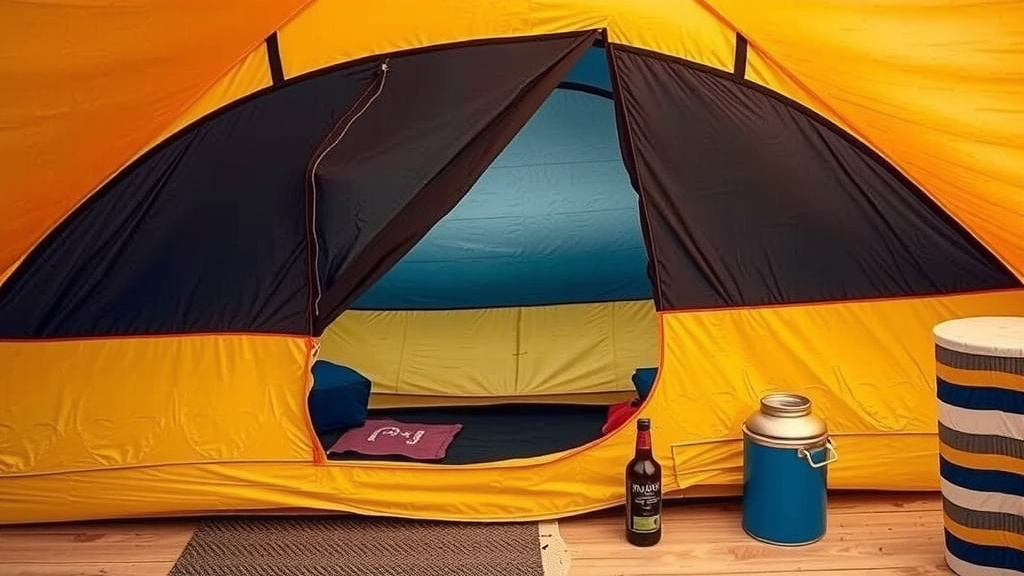
A Quick Comparison: Inflatable vs. Traditional
Let’s lay out some key differences we found:
| Feature | Inflatable Tent | Traditional Pole Tent |
|---|---|---|
| Setup Time | Very Fast (5-20 minutes) | Moderate to Slow (15-45+ minutes) |
| Ease of Setup | Simple, minimal parts | Can be complex, many poles |
| Wind Stability | Often excellent, flexible beams | Varies greatly by design |
| Packing | Generally compact, no poles | Can be bulky with poles |
| Potential Issues | Punctures (rare, repairable) | Bent or broken poles |
| Cost | Can be higher initially | Wide range, generally lower |
As you can see, inflatable tents offer some clear advantages, especially when it comes to speed and simplicity.
Is an Inflatable Tent Right for You? Consider This Checklist
To help you decide, ask yourself these questions:
- Do you value quick setup and takedown above all else?
- Do you often camp alone or with children and want to minimize setup hassle?
- Do you frequently camp in varied weather and want good wind stability?
- Are you looking for a more spacious and comfortable interior feel?
- Do you have a budget that can accommodate slightly higher initial costs for convenience?
If you answered “yes” to most of these, an inflatable tent is definitely worth serious consideration for your next adventure.
Conclusion
You’ve seen how inflatable tents stack up! They truly offer a faster, simpler camping experience. Their quick setup and surprising stability make them a joy to use, whether you’re a solo camper or wrangling kids. We found they provide unexpected comfort and space, turning your campsite into a cozy haven. If you’re looking to spend less time wrestling with poles and more time enjoying nature, an inflatable tent is an excellent choice. Your next adventure is just a pump away!
Frequently Asked Questions
How long do inflatable tents last?
With proper care, your inflatable tent can last for many camping seasons. We found that high-quality materials like TPU for air beams and durable fabrics for the body contribute to longevity. Regular cleaning and proper storage will significantly extend its lifespan.
Can inflatable tents be repaired if they get a puncture?
Yes, most punctures are easily repairable! Many inflatable tents come with a patch kit, similar to what you’d use for an air mattress. We found that small leaks can often be fixed quickly, meaning a minor puncture won’t end your camping trip.
Are inflatable tents heavier than traditional tents?
Generally, inflatable tents are comparable in weight to traditional tents of similar size and quality. While the air beams themselves add some weight, you eliminate the need for heavy poles. We found the overall weight is usually manageable for transport.
What happens if the air pump breaks?
Most inflatable tents use a standard valve system. If the included pump breaks, you can typically use a compatible manual or electric pump designed for airbeds or other inflatables. We found that replacement pumps are widely available if needed.
Are inflatable tents safe in extreme weather?
Well-constructed inflatable tents are surprisingly robust and can handle challenging weather. We found their flexible air beams often perform better in high winds than rigid poles. Always ensure you stake your tent down securely, regardless of the type.



![7 Best Rain Resistant Tents [2026]](https://leonardhomeoutdoor.com/wp-content/uploads/2026/09/7-best-rain-resistant-tents-2026-featured-768x432.jpg)