
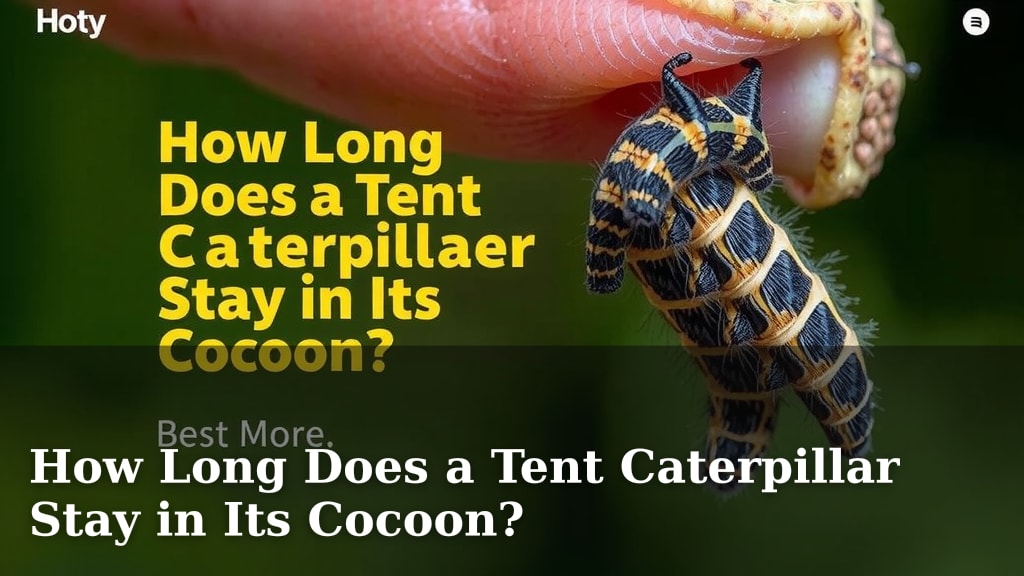
How Long Does a Tent Caterpillar Stay in Its Cocoon?
So, you’re wondering how long a tent caterpillar sticks around in its cozy cocoon? Generally, a tent caterpillar spends about 2 to 3 weeks inside its silky shelter before emerging as a moth. This transformation phase is quite a significant period in its life cycle, ensuring it’s ready for its next adventure.
During this time, the caterpillar undergoes a complete metamorphosis, changing from its crawling form into a winged adult. Think of it as its personal spa retreat! This stage is vital for its survival and reproduction, as the adult moth will focus on mating and laying eggs for the next generation.
- Tent caterpillars usually stay in their cocoons for 2-3 weeks.
- This is when the caterpillar transforms into a moth (metamorphosis).
- The cocoon provides a safe place for this change.
- Adult moths emerge ready to reproduce.
Let’s get into the details about what happens inside that silken sleeping bag and how long the whole cocoon phase really lasts.
The Tent Caterpillar’s Cocoon: A Transformation Timeline
So, you’re curious about the cocoon stage of the tent caterpillar? It’s a truly fascinating part of their life cycle. Think of the cocoon as a safe, silken nursery where the magic of metamorphosis happens. Within this protective shell, the humble caterpillar undergoes a dramatic transformation into a winged moth.
Most tent caterpillars spend about two to three weeks inside their cocoons. This period might seem short, but it’s packed with incredible biological changes. It’s during this time that their entire body structure rearranges itself. This allows them to grow wings and develop reproductive organs.
Understanding Metamorphosis: Caterpillar to Moth
The transformation inside the cocoon is called complete metamorphosis. This means the caterpillar goes through four distinct life stages: egg, larva (the caterpillar), pupa (inside the cocoon), and adult (the moth). Each stage looks entirely different from the last.
The Pupa Stage: A Dormant yet Dynamic Phase
Once the caterpillar is fully grown, it finds a sheltered spot to spin its cocoon. Inside this silk casing, it enters the pupa stage. While it might look inactive from the outside, a lot is happening within. The caterpillar’s body breaks down into a kind of “soup.” Then, specialized cells, called imaginal discs, use this material to build the adult moth’s body.
This rebuilding process is remarkably efficient. It allows for the development of wings, antennae, and a proboscis for feeding (though many adult moths don’t feed). The duration of this pupal stage can vary. Factors like temperature and species play a role. Generally, for tent caterpillars, it averages the 2 to 3 weeks we mentioned.
Factors Influencing Cocoon Duration
While we give a general timeframe, several things can speed up or slow down how long a tent caterpillar stays in its cocoon. You might wonder if they have a strict schedule.
Temperature’s Role
Temperature is a big player. Warmer weather generally speeds up insect development. So, if the weather is consistently warm during the pupal stage, the moth might emerge a bit sooner. Conversely, cooler temperatures can prolong the cocoon phase. This is a survival mechanism to wait for better conditions.
Species Variations
Did you know there are different kinds of tent caterpillars? While they share many similarities, there can be slight variations in their life cycles. This includes the length of time spent in the cocoon. Different species have adapted to various climates and conditions.
Food Availability (Pre-Cocoon)
The caterpillar’s diet before it spins its cocoon is also important. A well-fed caterpillar will have stored up enough energy reserves. This energy fuels the metamorphosis process. If the caterpillar had a poor diet, it might struggle to complete its transformation within the typical timeframe.
What Happens After the Cocoon?
Once the transformation is complete and the time is right, the moth will break free from its silken prison. It doesn’t just pop out easily, though. The moth secretes a special fluid that helps soften the silk.
Emergence of the Adult Moth
When the moth emerges, its wings are soft and folded. It needs to pump fluid into them to expand and harden them. This process can take a few hours. During this vulnerable time, the moth is immobile. It must wait for its wings to dry and become strong enough for flight.
This is a critical period. The moth is defenseless against predators. Once its wings are ready, its primary goal is reproduction. Adult tent moths don’t typically feed. Their sole purpose is to mate and lay eggs, starting the cycle anew. The lifespan of the adult moth is usually quite short, often only a week or two.
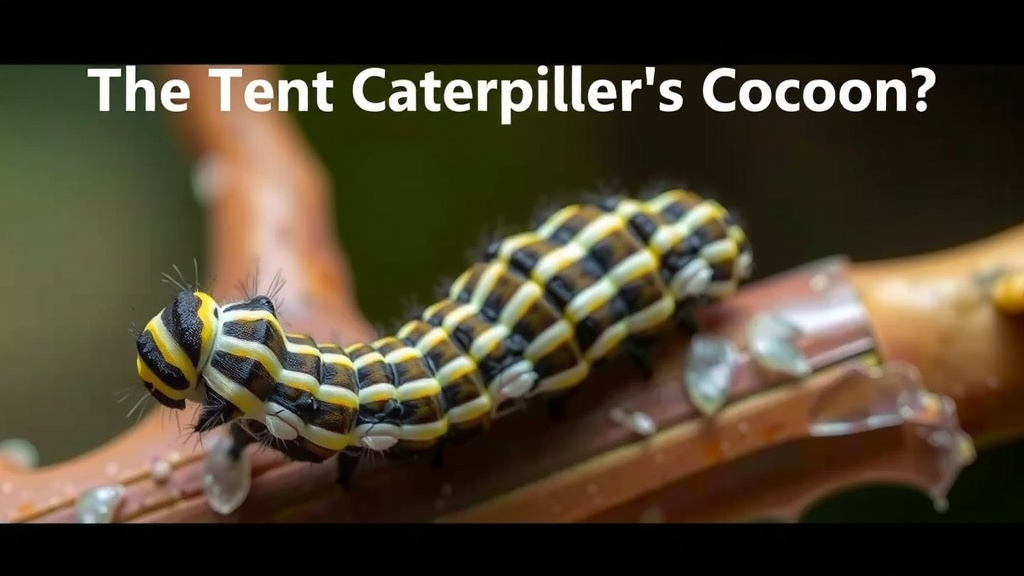
A Checklist for Understanding the Cocoon Phase
Here’s a quick rundown to help you remember the key points about the tent caterpillar’s cocoon time:
- The cocoon phase is part of complete metamorphosis.
- Caterpillars spend roughly 2-3 weeks transforming inside.
- Internal body changes are extensive, forming the moth.
- Temperature and species can affect the exact duration.
- Emergence requires softening the silk and drying wings.
- Adult moths focus on mating and laying eggs.
Conclusion
So, you’ve learned that a tent caterpillar’s journey in its cocoon typically lasts about 2 to 3 weeks. This is when the amazing process of metamorphosis happens, transforming a crawling caterpillar into a flying moth. Remember that factors like temperature can nudge this timeline a bit. Once free, the moth’s main mission is to start the cycle again. Keep an eye on those trees, and you might just witness this natural wonder yourself!
Frequently Asked Questions
Do tent caterpillars hibernate in their cocoons?
No, tent caterpillars do not hibernate in their cocoons. The cocoon stage is an active period of transformation, not one of dormancy. They are busy changing into moths inside. Hibernation is a different survival strategy for other insects during cold weather.
Can a tent caterpillar get stuck in its cocoon?
While rare, it’s possible for a tent caterpillar to struggle during emergence. Factors like poor health or unusual cocoon construction could pose challenges. Usually, the moth has the right mechanisms to break free.
How long does the whole tent caterpillar life cycle take?
The entire life cycle, from egg to adult moth, can span several months to a year, depending on the species and climate. The cocoon stage is just one part of this longer journey.
What do tent caterpillars eat before they make cocoons?
Before becoming a pupa, the caterpillar needs to eat a lot. Tent caterpillars feed on the leaves of host trees, like cherry, apple, or birch trees. A good diet provides the energy needed for metamorphosis.
Can you tell if a cocoon is ready to hatch?
It can be tricky to tell the exact hatching time. However, you might notice the cocoon becoming slightly thinner or more translucent as the moth develops. Sometimes, you can see the moth’s colors through the silk.

![7 Best Rain Resistant Tents [2026]](https://leonardhomeoutdoor.com/wp-content/uploads/2026/09/7-best-rain-resistant-tents-2026-featured-768x432.jpg)
![7 Best Luxury Tents Camping [2026]](https://leonardhomeoutdoor.com/wp-content/uploads/2026/08/7-best-luxury-tents-camping-2026-featured-768x432.jpg)
![7 Best Backpacking Tent For Elk Hunting [2026]](https://leonardhomeoutdoor.com/wp-content/uploads/2026/06/7-best-backpacking-tent-for-elk-hunting-2026-featured-768x432.jpg)
![7 Best Backpacking Tent For Wind And Rain [2026]](https://leonardhomeoutdoor.com/wp-content/uploads/2026/06/7-best-backpacking-tent-for-wind-and-rain-2026-featured-768x432.jpg)