

Lifetime Tent Trailer vs Jumping Jack: Which Is Best
Choosing between a Lifetime tent trailer and a Jumping Jack trailer depends on your main camping needs. For an ultra-lightweight and portable setup that’s easy to tow and store, a Jumping Jack often wins. If you prioritize a more robust, multi-functional trailer that can also serve as a cargo hauler, a Lifetime might be a better fit, though it’s heavier.
Both options offer a way to elevate your camping experience beyond a basic tent. We’ve found that the Jumping Jack excels in its quick setup and maneuverability. The Lifetime, on the other hand, is appreciated for its sturdy construction and versatility for hauling gear, making it a dual-purpose choice for many.
- Jumping Jack: Super light, easy to tow, quick setup.
- Lifetime: Heavy-duty, versatile cargo option, good for storage.
- Consider your towing capacity and primary use case.
- Both are great upgrades from a ground tent.
- Think about storage space requirements.
Let’s break down the key differences to help you decide which trailer best suits your adventures.
Tent Trailer Options: Lifetime vs. Jumping Jack
Deciding between a Lifetime tent trailer and a Jumping Jack trailer really comes down to your camping style and what you need most from your setup. Both are fantastic ways to upgrade from sleeping on the ground. We found that the choice often hinges on weight, ease of use, and how you plan to use the trailer when you’re not camping.
Understanding the Lifetime Tent Trailer
The Lifetime tent trailer is built with durability and versatility in mind. Think of it as a sturdy platform that happens to have a tent. Its main appeal is its ability to haul a lot of gear, not just camping equipment. You can use it for home projects or moving items.
Construction and Features
Lifetime trailers are known for their robust construction. They often feature a solid, box-like trailer base. This base is not just for the tent; it’s designed to carry cargo. You might find features like:
- A strong frame that can handle significant weight.
- Ample space on the trailer bed for equipment.
- A straightforward tent setup that attaches to the trailer.
This design means it feels more like a traditional utility trailer that includes a tent. This can be a huge advantage if you need a trailer for more than just camping.
Weight and Towing Considerations
One of the main differences you’ll notice is the weight. Lifetime trailers are generally heavier than Jumping Jacks. This is due to their more substantial construction and the larger trailer base. You’ll need to check your vehicle’s towing capacity carefully. A heavier trailer means you’ll feel it more on the road.
Exploring the Jumping Jack Trailer
Now, let’s look at the Jumping Jack trailer. This option is designed with portability and rapid deployment as its top priorities. It’s built to be as lightweight and easy to handle as possible.
Design for Simplicity and Speed
The Jumping Jack trailer is unique. It typically features a folding tent system that mounts on a lightweight frame. The trailer bed itself is often open or has a lower profile. This makes setup incredibly fast, often in just a few minutes. Many users report being able to set up camp before they even finish their first sip of coffee.
The tent unfolds from a compact package on the trailer. This means less wrestling with poles and fabric when you arrive at your campsite. It’s all about getting you settled and enjoying your trip quickly.
Lightweight and Maneuverable
Where the Jumping Jack truly shines is its incredibly low weight. This makes it a dream to tow, even for smaller vehicles. Many compact SUVs and even some sedans can handle a Jumping Jack with ease. Its light weight also makes it easier to maneuver in tight spaces, like campground roads or storage areas.
We found that this ease of towing is a major selling point for many campers. You don’t need a truck or a large SUV to take your camping shelter on the road.
Storage Advantages
Because they are so lightweight and often have a lower profile when folded, Jumping Jack trailers are easier to store. Many can fit into a standard garage or a smaller storage unit. This is a big plus if garage space is limited.
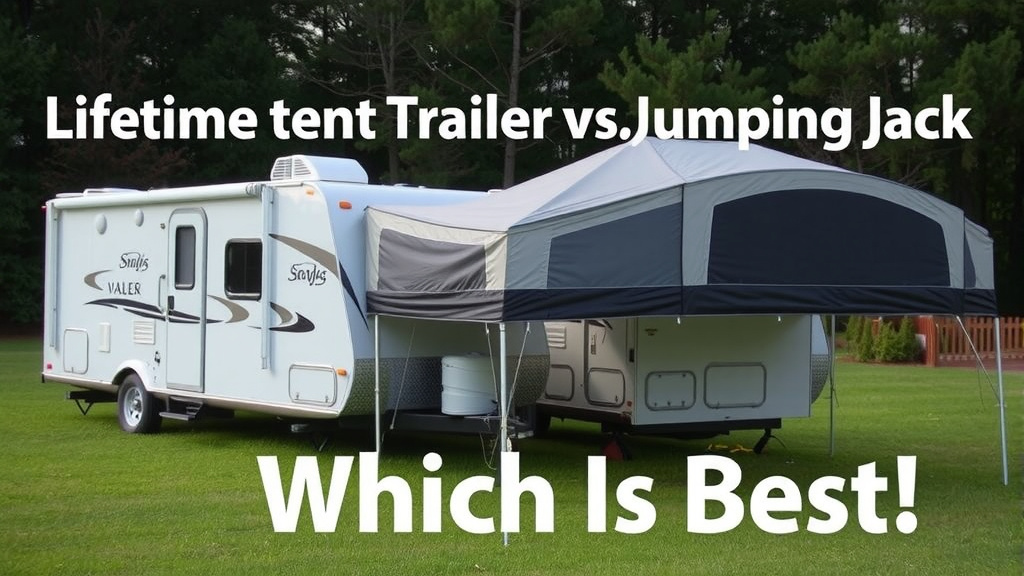
Key Comparison Points
Let’s put these two side-by-side to make the decision clearer. We’ve gathered the main differences to help you:
| Feature | Lifetime Tent Trailer | Jumping Jack Trailer |
|---|---|---|
| Weight | Heavier | Much Lighter |
| Towing | Requires moderate towing capacity | Can be towed by many smaller vehicles |
| Setup Time | Moderate | Very Quick (minutes) |
| Cargo Capacity | High (acts as utility trailer) | Limited (designed for tent and essentials) |
| Durability | Robust, heavy-duty | Durable, but lighter construction |
| Storage | Requires more space | Easier to store, fits smaller spaces |
Which is Right for Your Adventure?
So, who is each trailer best for? If you need a trailer that can double as a cargo hauler for DIY projects or moving large items, and you have a vehicle with decent towing power, the Lifetime might be your pick. It offers a sturdy base and good capacity.
If your main goal is to have a super-light, easy-to-tow, and quick-to-set-up camping shelter that doesn’t require a large vehicle, the Jumping Jack is likely the better choice. It prioritizes speed and convenience for the camping part of your life.
A Quick Checklist for Your Decision
To help you narrow it down, consider these questions:
- What is your vehicle’s towing capacity?
- How much gear do you typically bring camping?
- Do you need a trailer for non-camping uses?
- How much storage space do you have available?
- How important is setup speed after a long drive?
- What is your budget for a trailer?
Conclusion
Deciding between a Lifetime tent trailer and a Jumping Jack comes down to your core camping needs. You’ve seen that Lifetime offers a robust, cargo-ready platform, great if you need dual-purpose utility. The Jumping Jack, on the other hand, prioritizes rapid setup and ultra-light portability, perfect for those with smaller vehicles or limited storage. We found both are excellent upgrades from tent camping. Consider your vehicle’s towing limits, how quickly you want to camp, and if you’ll haul more than just your sleeping gear. Your next step is to check your vehicle’s towing capacity and measure your storage space. This will quickly point you to the trailer that fits your lifestyle best.
Frequently Asked Questions
Can I tow a Jumping Jack trailer with a compact SUV?
Yes, you absolutely can. Jumping Jack trailers are renowned for their lightweight design. This makes them towable by many compact SUVs and even some smaller cars. Always check your vehicle’s specific towing capacity before purchasing.
Is a Lifetime tent trailer suitable for off-road camping?
Lifetime tent trailers are built sturdy, but their heavier weight and more traditional trailer design might make them less agile on rough off-road trails compared to a lighter option. They are generally better suited for established campgrounds or well-maintained dirt roads.
How much faster is setting up a Jumping Jack compared to a Lifetime?
We found the difference is quite significant. Jumping Jacks are designed for speed, often setting up in just a few minutes. Lifetime trailers have a more traditional tent setup that might take a bit longer, requiring more manual assembly.
Can I use a Lifetime trailer for hauling appliances or home improvement supplies?
Yes, that’s one of the biggest advantages of a Lifetime trailer. Its sturdy, open platform is built like a utility trailer, making it ideal for transporting larger items, tools, or materials when you’re not using it for camping.
Which trailer is better if I have limited garage space for storage?
If storage space is a concern, the Jumping Jack is likely your better option. Its lighter weight and often lower profile when folded make it much easier to store in a standard garage or even a side yard.
![7 Person Tent Car Camping [2026]](https://leonardhomeoutdoor.com/wp-content/uploads/2026/08/7-person-tent-car-camping-2026-featured-768x432.jpg)

![7 Person Tent 2025 [2026]](https://leonardhomeoutdoor.com/wp-content/uploads/2026/08/7-person-tent-2025-2026-featured-768x432.jpg)