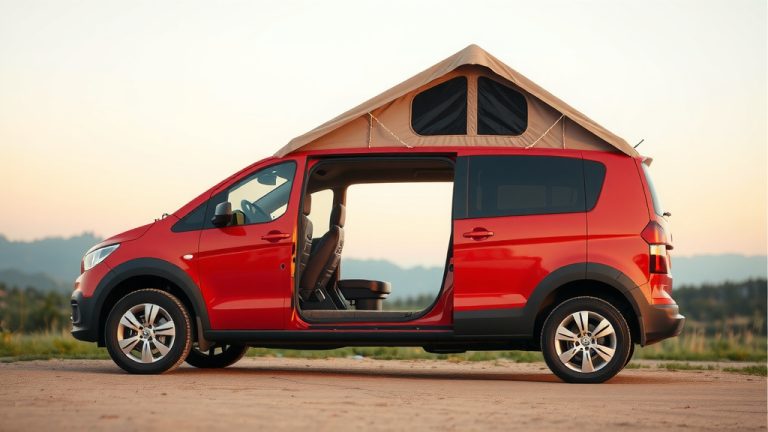
Rooftop Tent vs Teardrop Trailer: Which is Right for You
When choosing between a rooftop tent and a teardrop trailer for your adventures, the teardrop trailer generally offers more space and comfort for longer trips. Rooftop tents are fantastic for quick setups and minimalist camping, while teardrop trailers provide a more robust home base. Both offer unique benefits for outdoor enthusiasts looking to upgrade their camping experience.
Your decision depends heavily on your travel style and needs. Are you looking for a quick escape to nature or a more extended journey with amenities? We’ve researched the key differences to help you make the best choice for your next getaway. Think about how much gear you pack and how much time you plan to spend inside your setup.
- Rooftop tents: Quick setup, minimalist, great for shorter trips.
- Teardrop trailers: More space, comfortable for longer trips, good amenities.
- Consider your packing habits and trip duration.
- Think about where you’ll be camping.
Let’s break down the pros and cons of each to help you decide which is the perfect match for your outdoor dreams.
Rooftop Tent vs. Teardrop Trailer: Which Adventure Rig is Right for You?
Choosing between a rooftop tent and a teardrop trailer can feel like picking your favorite flavor of ice cream – both are great, but they offer different experiences. We’ve looked at what makes each one special to help you figure out which one will be your perfect adventure buddy.
Think about this: do you love the idea of being super light and fast, or do you want a cozy little home base wherever you park? Your answer will point you toward the right choice.
Setting Up Camp: Speed vs. Comfort
Rooftop Tent: The Quick-Deploy Shelter
Imagine pulling up to a scenic spot after a long day of driving. With a rooftop tent, you can have your sleeping quarters ready in minutes. Most models unfold with a simple pull or push. This is a huge win if you often arrive at camp late or just want to start relaxing sooner.
We found that setting up often involves just a few steps. You might need to deploy a small ladder, and then your bed is ready. It’s like magic, but for camping! This speed is fantastic for spontaneous trips or when you need to pack up quickly to catch the sunrise.
Teardrop Trailer: Your Mobile Base Camp
A teardrop trailer offers a different kind of convenience. While it takes a bit longer to set up than a rooftop tent, it provides so much more. You’re essentially bringing a small, comfortable room with you. Think of it as your **personal mini-cabin on wheels**.
You’ll need to unhitch it, level it, and maybe pop out a stabilizer leg. But once that’s done, you have shelter that feels much more substantial. It’s like having a tiny apartment that goes wherever you do.
Living Space and Amenities: What to Expect
Inside Your Rooftop Tent
Rooftop tents are designed for sleeping and basic shelter. The sleeping area is usually comfortable, often coming with a built-in mattress. You’ll find space for two to three people, depending on the tent size.
However, don’t expect a lot of extra room. You’re essentially sleeping on top of your vehicle. Storage inside is limited to what you can bring in with you, often just sleeping bags and small personal items. It’s cozy, not spacious.
Inside Your Teardrop Trailer
This is where teardrop trailers really shine. They offer dedicated sleeping space, which is often more comfortable and spacious than a rooftop tent. But the real bonus is the galley kitchen. Many teardrops come equipped with a small sink, a place for a cooler, and even a portable stove.
You might also find a bit of storage for clothes or gear. Some larger models even offer a small dinette area. It’s a significant step up in terms of **comfort and convenience**, especially for longer trips. Many people find this makes cooking and living outdoors much easier.
Where Can You Camp? The Terrain Factor
Rooftop Tents: Freedom to Roam
One of the biggest advantages of a rooftop tent is its versatility. Because it sits on your vehicle’s roof rack, you can park your car just about anywhere a car can go. This opens up possibilities for camping in remote locations, on rocky terrain, or even in a standard parking spot.
You don’t need a perfectly flat campsite. The tent sits elevated, keeping you away from puddles or uneven ground. This **mobility and flexibility** are huge draws for off-road enthusiasts. Many drivers find they can access spots not reachable by larger trailers.
Teardrop Trailers: Site Selection Matters
Teardrop trailers require a bit more thought when choosing a campsite. You’ll need a spot large enough to park and open the trailer’s door and kitchen area. You also need reasonably level ground for stability.
While they can go on gravel roads, extremely rough or heavily wooded trails might be challenging. You’ll want to consider if your tow vehicle can handle the terrain before you commit to a path. Some advanced teardrops are designed for off-road, but generally, they prefer more established campsites or clearings.
Packing and Gear: What Fits?
Rooftop Tent: Pack Light, Live Right
With a rooftop tent, you’re generally traveling lighter. Your sleeping gear stays in the tent when it’s closed, saving precious cargo space in your vehicle. This is great if you like to travel with just the essentials.
However, if you’re the type who brings a full kitchen setup, multiple chairs, and all the outdoor toys, you might find space is a real constraint. Everything else has to fit inside your car or truck, which can get crowded quickly. Think **minimalist packing**.
Teardrop Trailer: Bring It All Along
Teardrop trailers offer a significant advantage when it comes to storage. The trailer itself is a dedicated cargo space. You can pack extra blankets, chairs, cooking equipment, and even sports gear.
This means you can be more comfortable and prepared. If you enjoy elaborate meals outdoors or need to bring gear for various activities, the teardrop makes it much easier. You won’t have to cram everything into your car. It’s like having a **mobile storage unit**.
Cost and Maintenance: What to Consider
Rooftop Tent Costs and Upkeep
Rooftop tents can range from a few hundred dollars for basic models to $2,000 or more for high-end, feature-rich options. Installation usually requires a roof rack system, which might be an additional cost if your vehicle doesn’t already have one.
Maintenance is generally low. You’ll want to keep the tent fabric clean and dry to prevent mold. Like any fabric item exposed to the elements, it requires occasional care. We found that checking seals and zippers is also a good practice.
Teardrop Trailer Costs and Upkeep
Teardrop trailers represent a larger investment, often starting at $5,000 and going up to $20,000 or more, depending on size and features. You also need a vehicle with adequate towing capacity.
Maintenance is similar to any small trailer. You’ll need to check tires, brakes (if equipped), lights, and bearings. The body and interior will also require care, much like a small RV. Think of it as **maintaining a small vehicle**.
A Quick Comparison Table
| Feature | Rooftop Tent | Teardrop Trailer |
|---|---|---|
| Setup Speed | Very Fast (minutes) | Moderate (10-20 minutes) |
| Living Space | Sleeping only, minimal room | Sleeping + galley, more room |
| Terrain Versatility | High (can park almost anywhere) | Moderate (needs suitable parking) |
| Gear Storage | Limited (saves car space) | Excellent (dedicated trailer space) |
| Comfort for Long Trips | Basic | Good to Excellent |
| Cost | Lower to Moderate | Moderate to High |
Your Adventure Checklist: Making the Final Call
To help you decide, consider these points:
- How much gear do you typically pack for a trip?
- How important is having a kitchen setup for you?
- What kind of roads do you usually drive on?
- How much time do you spend inside your camping setup?
- What’s your budget for a new adventure rig?
- Are you comfortable towing a small trailer?
Conclusion
Choosing between a rooftop tent and a teardrop trailer boils down to your ideal adventure. If you prioritize speedy setups and minimalist travel, a rooftop tent is likely your best bet. For those seeking more comfort, space, and amenities for extended trips, a teardrop trailer offers a superior mobile living experience. Consider how much gear you bring and the types of terrain you frequent. Ultimately, the right choice helps you maximize your enjoyment of the great outdoors. Start planning your next trip by assessing your personal camping priorities today!
Frequently Asked Questions
Can I put a rooftop tent on any car?
Generally, yes, but your vehicle needs a sturdy roof rack system. We found that most cars and SUVs can support a rooftop tent, but it’s essential to check your vehicle’s weight capacity. Your roof rack must be rated for the tent’s weight, especially while driving.
Do teardrop trailers require a special license to tow?
In most of the US, teardrop trailers are considered small travel trailers and do not require a special driver’s license. You’ll need a vehicle with adequate towing capacity, and you must follow standard towing regulations for your state. Always check your local laws to be certain.
How much more does a teardrop trailer cost than a rooftop tent?
Teardrop trailers are typically a larger investment than rooftop tents. While basic rooftop tents can be found for under $1,000, teardrop trailers usually start around $5,000 and can easily exceed $20,000. This price difference reflects the added space and amenities they provide.
Is a rooftop tent safe from wildlife?
Yes, a rooftop tent provides a good barrier against most ground-dwelling animals. You’re elevated off the ground, making it harder for critters to reach you. However, it does not offer protection against bears or other larger predators.
Can I use a teardrop trailer in cold weather?
Many teardrop trailers can be used in colder weather, but insulation levels vary by model. You’ll want to ensure your trailer has adequate insulation and consider bringing a small heater designed for enclosed spaces. Their compact size can make them easier to keep warm than larger RVs.

![7 Best 10x20 Canopy Tent [2026]](https://leonardhomeoutdoor.com/wp-content/uploads/2026/08/7-best-10x20-canopy-tent-2026-featured-768x432.jpg)