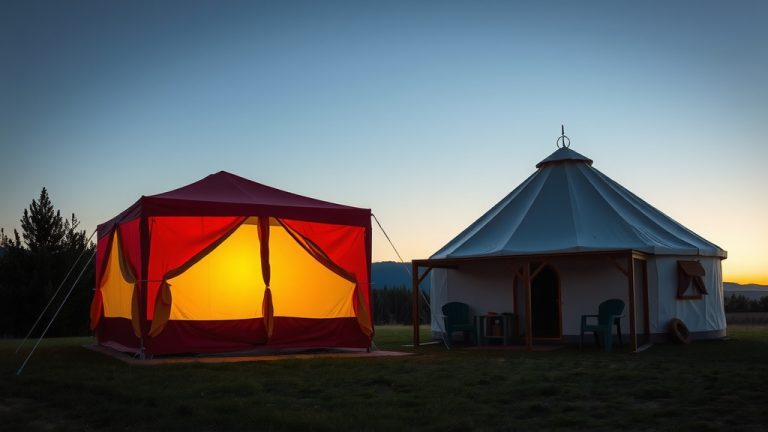
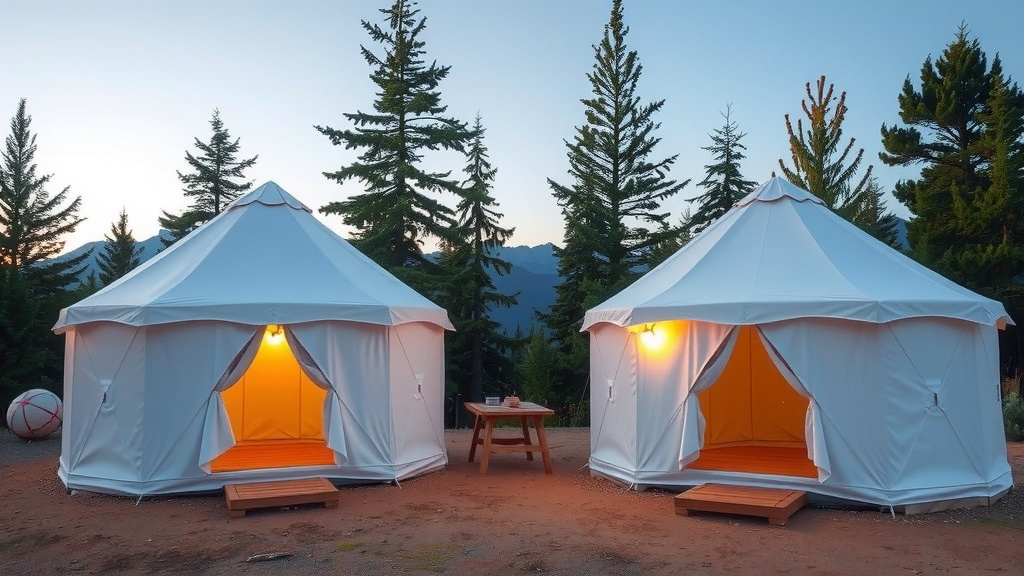
Wall Tent vs Yurt: Which Is Right for You
When choosing between a wall tent and a yurt for your outdoor adventures, consider your priorities. A wall tent generally offers more customization and rugged durability, often at a lower initial cost. Yurts, while typically more expensive, provide a unique, circular living space with excellent insulation and structural stability.
Both structures offer a step up from traditional camping. You get a more permanent feel and protection from the elements. We found that wall tents are great for longer stays where you might want to customize your setup. Yurts often appeal to those seeking a more distinct, cozy dwelling that feels like a permanent glamping spot.
- Wall tents are often more budget-friendly upfront.
- Yurts tend to offer better insulation for year-round use.
- Wall tents allow for more layout flexibility.
- Yurts have a unique, circular design.
- Consider your climate and intended use when deciding.
Let’s break down the key differences to help you decide which shelter is the right fit for your next wilderness escape.
Wall Tent vs. Yurt: Which Is Your Better Outdoor Dwelling?
When you’re dreaming of spending more time outdoors, thinking about shelter is key. You want something that keeps you comfy and protected. We’ve looked at two popular options: the wall tent and the yurt. Both offer a cozy retreat from the elements. But they do it in different ways. Let’s figure out which one might be your perfect match.
Understanding the Wall Tent: Simplicity and Durability
A wall tent is essentially a sturdy tent with vertical walls. Think of it as a canvas house that you can set up in the wilderness. They often use a frame made of poles. These poles support a heavy-duty fabric cover. This design gives them a lot of internal space. It also allows for a more traditional room-like feel.
Construction and Materials
Wall tents are known for their robust construction. The walls are typically made from heavy canvas. This material is treated to be waterproof and mildew-resistant. The frame is usually steel or aluminum tubing. It’s designed to withstand strong winds and heavy snow loads. Many people find they last for many years with proper care.
Setup and Portability
Setting up a wall tent can take a bit of effort. It often requires two people. You need to assemble the frame and then stretch the canvas over it. Once set up, they can be quite secure. However, they are designed to be taken down and moved. This makes them a good choice for seasonal use or if you plan to relocate your camp.
Customization and Layout
One of the biggest advantages of wall tents is their flexibility. Because they have straight walls and a rectangular floor, you can arrange furniture inside easily. You can add dividers, shelves, and even a wood stove. This means you can tailor the space to your exact needs. Many owners treat their wall tents like a small cabin.
Wood Stoves in Wall Tents
Adding a wood stove is a very popular feature for wall tents. The canvas material can handle the heat from a stovepipe. This allows for comfortable living even in cold weather. We found that proper ventilation and safety measures are essential when using a stove (National Fire Protection Association).
Exploring the Yurt: A Circular Haven
A yurt is a round tent that originated with nomadic peoples in Central Asia. Modern yurts are a bit different but keep the core circular design. They have a tension band, rafters, and a lattice wall. This creates a strong, self-supporting structure. Yurts often feel more like a permanent dwelling.
Unique Circular Design
The most striking feature of a yurt is its round shape. This design is not just aesthetic; it’s structurally sound. The roundness helps distribute weight evenly. It makes them very stable, especially in high winds. Inside, the curved walls can feel very cozy and inviting.
Insulation and Year-Round Living
Many yurts are designed for year-round comfort. They often come with insulated wall covers and a reflective roof. This helps keep them warm in the winter and cooler in the summer. Some people live in yurts full-time. They can be a more energy-efficient option than traditional homes.
Energy Efficiency
The circular shape and insulation can make yurts quite efficient. Less air can escape from a round structure compared to a rectangular one. This means you might need less energy to heat or cool your yurt. Many experts point to the passive solar design potential in yurts (U.S. Department of Energy).
Setup and Permanence
Setting up a yurt is a bigger project than a tent. It typically requires a solid foundation, often a wooden platform. The process involves assembling the lattice walls, rafters, and tension band. Then, the cover is stretched over the frame. While they can be disassembled, they are usually considered more of a semi-permanent structure.
Interior Space and Light
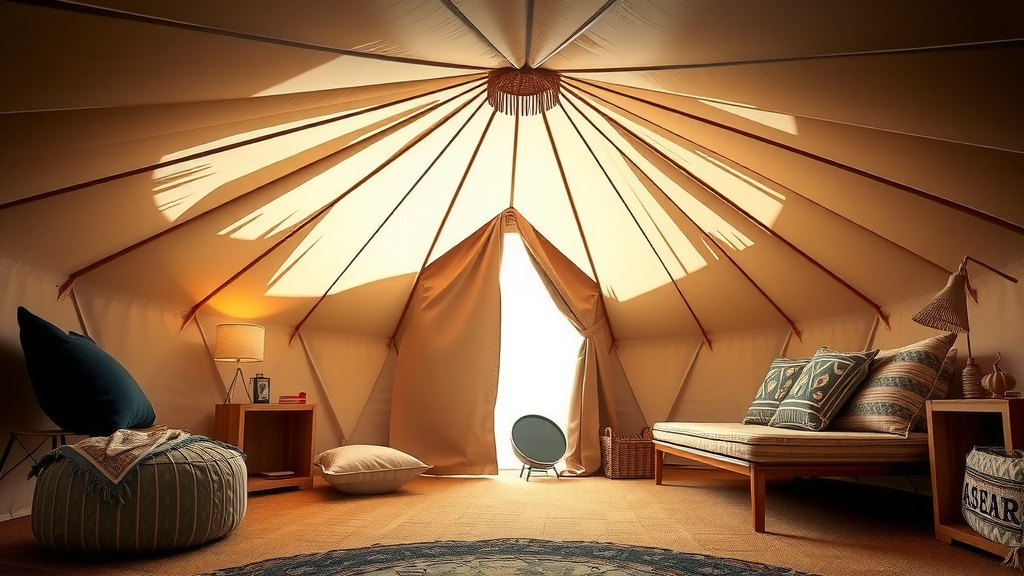
The open, circular interior of a yurt can feel surprisingly spacious. Many yurts have a central dome or skylight. This brings natural light into the center of the dwelling. It creates a bright and airy atmosphere. Furniture placement can be a bit trickier due to the curved walls, but it’s definitely manageable.
Key Differences: A Direct Comparison
Let’s put these two shelters side-by-side. We found some clear distinctions that can help you decide.
| Feature | Wall Tent | Yurt |
|---|---|---|
| Shape | Rectangular with angled roof | Circular |
| Durability | Very durable, especially frames | Extremely durable, wind-resistant |
| Insulation | Moderate (can be improved) | Excellent (often standard) |
| Setup Difficulty | Moderate to difficult | Difficult, often needs platform |
| Portability | Relatively portable | Semi-permanent, harder to move |
| Customization | High flexibility | Moderate flexibility |
| Cost | Generally lower upfront | Generally higher upfront |
Cost Considerations
When we looked at pricing, wall tents often have a lower initial investment. You can find good quality wall tents for a few hundred to a couple thousand dollars. Yurts, on the other hand, tend to be more expensive. A basic yurt kit can start around $6,000 and go up significantly from there. This doesn’t always include the platform or insulation upgrades.
Ease of Use and Maintenance
Wall tents might be easier to maintain for some. Cleaning canvas is straightforward. Repairing tears is usually simple. Yurts require a bit more care for their specialized fabric and frame system. Regular checks of the tension band and structure are important. Experts often recommend periodic sealing of yurt fabric (Environmental Protection Agency guidelines for building materials).
Choosing the Right Shelter for You
So, which one is the winner? It really depends on your personal needs and preferences. Think about what’s most important for your outdoor lifestyle.
When a Wall Tent Might Be Best
- You need a budget-friendly option.
- You want to be able to change your setup often.
- You plan to move your camp seasonally.
- You love the idea of adding a wood stove.
- You prefer a more traditional cabin-like interior.
When a Yurt Might Be Your Top Choice
- You want a cozy, round living space.
- You dream of year-round camping comfort.
- You plan to stay in one location for a long time.
- Structural stability and wind resistance are top priorities.
- You appreciate a unique architectural style.
Ultimately, both structures offer a fantastic way to connect with nature. They provide comfort and shelter beyond a regular tent. We found that understanding these key differences helps make the choice much clearer. Which adventure are you ready for?
Conclusion
Deciding between a wall tent and a yurt is about aligning your outdoor dreams with practical needs. We found wall tents shine for their budget-friendliness and layout flexibility, making them adaptable for seasonal use or DIY customization. Yurts offer a unique, stable, and well-insulated round living space, often ideal for more permanent setups and year-round comfort. Consider your climate, how long you’ll stay, and your budget. Once you’ve weighed these factors, you’ll be ready to choose the shelter that best suits your adventures.
Frequently Asked Questions
Can a yurt be lived in year-round?
Yes, many modern yurts are specifically designed for year-round living. They often come with excellent insulation options for both hot and cold weather. The circular design also contributes to efficient heating and cooling.
Are wall tents difficult to set up by yourself?
While some wall tents can be set up by one person with patience, it’s generally much easier and faster with two people. The frame assembly and canvas stretching are simpler when you have an extra set of hands.
Which option is better for windy conditions?
Yurts generally have an advantage in very windy conditions. Their inherent circular shape and tension-band design allow them to withstand strong gusts more effectively than a rectangular wall tent.
Can I install plumbing or electricity in a wall tent or yurt?
Both structures can be adapted for utilities, but it requires careful planning. Yurts are often built on platforms that can accommodate under-floor utilities. Wall tents can have electricity run to them, and some customizations allow for basic plumbing, but it’s generally more complex than in a yurt.
What is the typical lifespan of a wall tent versus a yurt?
With proper care and maintenance, both structures can last for many years. A well-maintained wall tent might last 10-15 years or more, depending on the fabric quality and exposure. Yurts, being more substantial and often built on foundations, can last 20-30 years or even longer.
![7 Best Beach Cabana Tent [2026]](https://leonardhomeoutdoor.com/wp-content/uploads/2026/08/7-best-beach-cabana-tent-2026-featured-768x432.jpg)