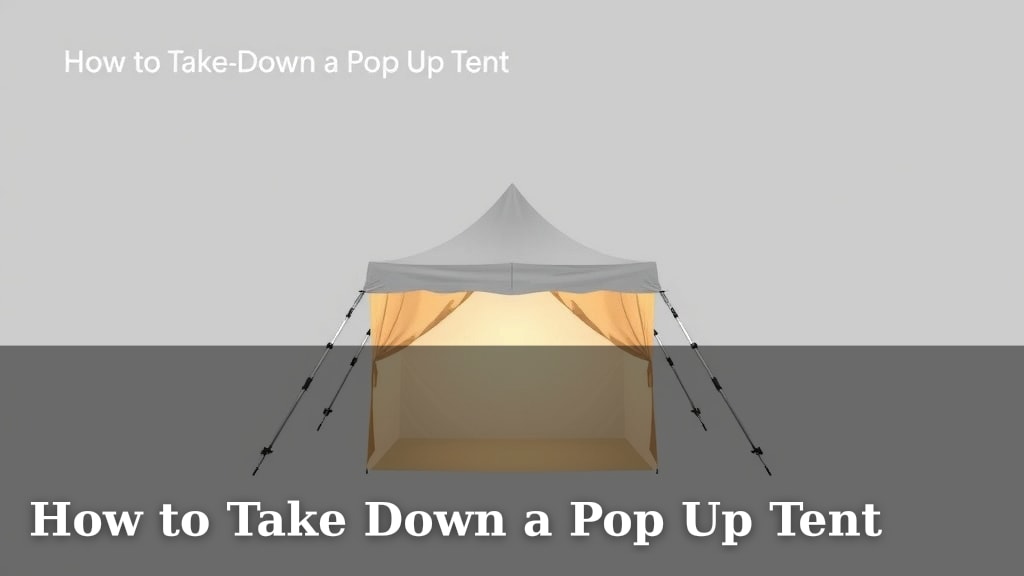
How to Take Down a Pop Up Tent
The easiest way to take down a pop-up tent is to reverse the setup process. You’ll want to fully collapse the frame before trying to fold the fabric. This simple method works for most common pop-up tent designs. We found this makes the process much less frustrating.
Many campers find setting up pop-up tents a breeze, but taking them down can sometimes be a puzzle. Knowing the right way to fold and store your tent ensures it lasts longer. We’ve researched common issues and found that a few key steps make all the difference for a smooth takedown and easy storage.
TL;DR:
- Reverse your setup steps.
- Collapse the frame completely first.
- Fold the fabric neatly afterwards.
- Store in its original bag.
- Always dry your tent before packing.
Let’s walk through exactly how to take down your pop-up tent step by step, so you can get back to enjoying your time and avoid any unnecessary hassle.
Folding Your Pop-Up Tent: A Step-by-Step Guide
Taking down your pop-up tent shouldn’t be a wrestling match. We’ve found that most pop-up tents are designed to fold up neatly. The key is to work with the tent’s natural shape. By following a few simple steps, you can get your tent packed away quickly. This guide will help you avoid common frustrations.
First, Clear the Area and Prepare the Tent
Before you start folding, make sure you have enough space. A clear, flat area is best. You don’t want to be tripping over gear or battling wind. Also, remove all your belongings from inside the tent. Everything must be out for the folding process to work. This step ensures you don’t accidentally pack away your sleeping bag or your favorite camp mug.
Next, you’ll want to ensure your tent is dry. We found that packing a damp tent can lead to mildew. Mildew is not fun, and it can damage your tent over time. If it rained, or if there’s morning dew, take a moment to wipe the tent down. A quick sweep with a dry towel is usually enough. Let it air dry for a bit if possible. A dry tent packs easier and smells better!
Collapsing the Frame: The Foundation of Folding
Most pop-up tents rely on a flexible frame. This frame is usually made of fiberglass poles that bend. To start folding, you need to collapse this frame. Think of it like deflating a balloon before you try to fold it. The tent fabric will become much more manageable once the frame is down.
Identify the Collapsible Sections
Look at your tent’s poles. You’ll see that they often bend in multiple places. Many pop-up tents have a central hub or connection point. Others have poles that are designed to bend inwards on themselves. We found that understanding where the poles naturally want to bend is key. Examine the frame structure to see how it was set up. This will tell you how it should collapse.
Gently Bend and Compress
Now, gently push the sides of the tent inward. You’re trying to bring the poles together. Don’t force anything. If the poles resist, you might be pushing the wrong way. Try a different angle. The goal is to make the tent a flatter shape. For many circular pop-up tents, this means bringing opposite sides together.
You might hear a soft click as the poles bend or lock into a collapsed position. This is normal. Keep working the frame until it’s as flat as possible. It should look like a deflated tire or a large, floppy frisbee at this stage. We found that it’s helpful to have one person hold the tent while another guides the frame. This makes it a two-person job sometimes.
Folding the Fabric Around the Collapsed Frame
Once the frame is nicely collapsed and flat, it’s time to fold the fabric. This is where the tent starts to resemble its original packing shape. The collapsed frame now acts as a guide for neat folding.
Creating Accordion Folds
With the frame flat, you want to fold the tent fabric. Imagine you are folding a large piece of paper or a blanket. Start by folding one side over the collapsed frame. Then, fold the other side over to meet it. This creates a long, narrow shape. Some people find it easiest to create an accordion fold. This means folding it back and forth, like a fan.
We recommend folding the tent into thirds or quarters. This depends on the size and shape of your tent. The goal is to make it compact enough to fit into its storage bag. Keep the fabric as smooth as possible as you fold. This helps prevent creases and makes the tent easier to store. Some tents have straps to help secure the folded fabric. If yours does, use it now.
Securing the Folded Tent
Once you have the tent folded into a manageable shape, you need to secure it. Many pop-up tents come with a dedicated bag. Your folded tent should slide right into this bag. If the tent is too big, you might need to adjust your folds. Try making them tighter or more even. We found that a bit of practice makes this part much quicker.
Ensure all poles are tucked in. They should be contained within the folded fabric. This keeps everything neat. It also prevents sharp pole ends from poking through the fabric or bag. Once the tent is in its bag, close the zipper or tie it up securely. This keeps it protected until your next adventure.
What If My Tent Doesn’t Fold Like This?
Not all pop-up tents are identical. Some have unique folding mechanisms. If the general advice above doesn’t seem to apply, check your tent’s manual. Many manufacturers include specific folding instructions. We also found that watching videos online can be a lifesaver. Search for your tent model, and you’ll likely find a helpful tutorial.
For example, some tents have a spring-loaded mechanism. These might require a specific twist or push to collapse. Others might have poles that detach. Always refer to your specific tent’s design. Your tent’s instructions are the most reliable source. Don’t be afraid to consult them. Many experts suggest reading the manual before your first setup, which can save time later.
Troubleshooting Common Folding Problems
What if the tent just won’t cooperate? Here are a few things we’ve learned:
- Tent is too stiff: Make sure the frame is fully collapsed. Sometimes a pole might feel stuck. Gently wiggle it to see if it will bend more.
- Fabric won’t lay flat: Ensure there are no loose items inside. Try smoothing out the fabric as you fold. Sometimes a stubborn crease will smooth out on its own.
- Can’t get it in the bag: Refold the tent more tightly. Aim for smaller, more compact folds. Making sure the frame is perfectly flat can help.
Storing Your Pop-Up Tent Properly
Once your tent is neatly folded and bagged, proper storage is important. We recommend storing your tent in a cool, dry place. Avoid areas with extreme temperatures or high humidity. A garage, basement, or closet is usually ideal.
Protecting the tent from pests is also wise. Small critters might find the tent fabric appealing. Storing it in its bag, and perhaps in a larger plastic bin, can offer extra protection. We found that keeping it away from sharp objects prevents accidental tears. Proper storage ensures your tent is ready for your next trip.
Your Quick Tent Takedown Checklist
Here’s a simple checklist to help you remember the steps:
- Clear the tent and the surrounding area.
- Ensure the tent is dry.
- Collapse the tent frame completely.
- Fold the fabric neatly around the frame.
- Secure the folded tent with straps or ties.
- Place the tent in its storage bag.
Conclusion
You’ve learned that taking down your pop-up tent doesn’t have to be a chore. By reversing the setup process and focusing on collapsing the frame first, you make folding the fabric much simpler. Remember to always dry your tent before packing it away to prevent mildew. A little practice makes this process quick and easy. Now you’re ready to pack up efficiently and get back to enjoying your outdoor adventures.
Frequently Asked Questions
How do I store my pop-up tent long-term?
For long-term storage, ensure your tent is completely dry and clean. Store it in its original bag in a cool, dry place away from extreme temperatures. Consider placing the bag inside a plastic bin for extra protection from pests and moisture.
What if my pop-up tent poles are stuck and won’t collapse?
If poles feel stiff, gently wiggle them rather than forcing them. Make sure the frame is as flat as possible before attempting to bend the poles. Sometimes, slightly adjusting the tent’s shape can help release tension on a stubborn pole.
Can I take down my pop-up tent by myself?
Yes, most pop-up tents can be taken down by one person, though it might be easier with a second person. If you’re alone, work methodically on a flat surface to manage the collapsing frame and fabric.
My tent doesn’t fit back into its original bag, what did I do wrong?
This usually means the tent wasn’t folded tightly enough. Ensure the frame is fully collapsed and flat, then try making smaller, more compact folds with the fabric. Smoothing out the fabric as you fold can help achieve a smaller package.
Is it okay to fold my pop-up tent while it’s still a little wet?
We strongly advise against folding a wet tent. Moisture trapped inside can lead to mold and mildew, which can damage the fabric and create unpleasant odors. Always aim to dry your tent thoroughly before packing it, even if it means letting it air dry at home.
![7 Best Tent For 2 3 People [2026]](https://leonardhomeoutdoor.com/wp-content/uploads/2026/09/7-best-tent-for-2-3-people-2026-featured-768x432.jpg)

![7 Best A Frame Tent [2026]](https://leonardhomeoutdoor.com/wp-content/uploads/2026/08/7-best-a-frame-tent-2026-featured-768x432.jpg)