
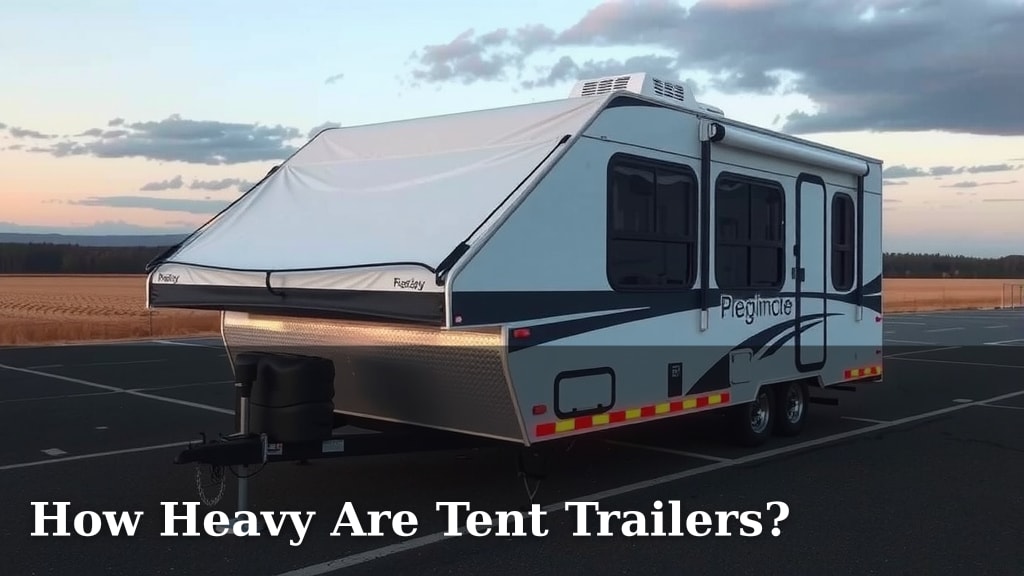
How Heavy Are Tent Trailers?
Tent trailers, also known as pop-up campers, can weigh anywhere from 500 to 3,000 pounds. The exact weight depends on their size, features, and materials. Understanding this range is key to knowing if your current vehicle can tow one safely and legally. We found that smaller, basic models are much lighter than larger ones with more amenities.
When considering a tent trailer, you’ll encounter terms like dry weight and gross vehicle weight rating (GVWR). Dry weight is the trailer’s weight without any cargo or fluids. GVWR is the maximum safe operating weight, including the trailer itself and everything you put inside. Many factors influence the final weight, from the built-in kitchen to the water tanks.
- Tent trailers typically weigh between 500 and 3,000 lbs.
- Dry weight is the trailer’s empty weight.
- GVWR is the maximum safe loaded weight.
- Weight varies by size and added features.
- Check your vehicle’s towing capacity first.
Let’s break down the weights you’ll encounter and how they affect your towing decisions.
Understanding Tent Trailer Weights for Your Towing Needs
So, you’re curious about how much a tent trailer actually weighs. It’s a super important question! Getting this right means a safer, smoother trip for you and your vehicle. We’ve found that tent trailers can range quite a bit in weight. This depends on their size, what features they come with, and the materials used. Think of it like buying a car – a small sedan weighs less than a big SUV, right?
The Different Weights You’ll See
When you start shopping, you’ll hear a few key terms. Knowing these will help you understand the numbers. We found that distinguishing between these weights is key to a successful purchase.
Dry Weight: The Empty Shell
First up is the dry weight. This is what the trailer weighs straight from the factory. It’s the trailer itself, with no added liquids or cargo. Think of it as the base model weight. It doesn’t include propane tanks filled, water in the tanks, or any of your camping gear. It’s a good starting point for comparison, but it’s rarely how much the trailer will actually weigh on the road.
Curb Weight: Ready for the Road, Mostly
Next, you might encounter curb weight. This is a bit closer to reality. It includes the trailer’s dry weight plus essential operating items. This usually means fully filled propane tanks and a standard battery. It’s still not the final number, though. It doesn’t account for any water or personal items you bring.
GVWR: The Maximum Safe Load
This is perhaps the most critical number: the Gross Vehicle Weight Rating (GVWR). Your trailer’s GVWR is the absolute maximum weight it’s designed to handle safely. This includes the trailer’s own weight, plus all the water, propane, and everything you pack inside. Many experts recommend you never load your trailer beyond 90% of its GVWR to ensure safety (RVIA).
Hitch Weight: The Downward Push
Don’t forget about the hitch weight. This is the amount of weight the trailer puts down on your vehicle’s hitch. A good rule of thumb is that hitch weight is about 10-15% of the trailer’s total loaded weight. This downward force affects your vehicle’s handling and steering. Your vehicle’s owner’s manual will have specific limits for tongue weight.
Factors Affecting Tent Trailer Weight
So, what makes one tent trailer weigh more than another? Several things come into play. We found that the more features you add, the heavier the trailer generally becomes.
Size Matters, Of Course
It’s pretty straightforward: bigger trailers weigh more. A compact, two-person pop-up will be much lighter than a larger family model with multiple sleeping areas. We saw that trailers designed for longer trips often have more robust construction, adding to their weight.
Built-in Amenities Add Up
Those handy features you love? They add pounds. Think about a built-in stove, a sink with a water tank, a small refrigerator, or even a cassette toilet. Each of these adds weight to the trailer, especially when you factor in the water or supplies needed to operate them.
Water Tanks: A Big Contributor
Water is heavy! A standard 20-gallon freshwater tank weighs over 160 pounds when full. Add a grey water tank, and you’re looking at hundreds of extra pounds. This is why the difference between a trailer’s dry weight and its fully loaded weight can be substantial.
Materials and Construction
The materials used in building the trailer also play a role. Some manufacturers use lighter-weight aluminum framing, while others opt for steel. The type of canvas, the thickness of the cabinetry, and even the type of flooring can all contribute to the overall weight. Researching the construction methods can give you a clue.
Typical Weight Ranges You’ll Encounter
Let’s look at some general weight categories. This should give you a clearer picture of what to expect. We found these ranges helpful when comparing different models.
| Trailer Type | Typical Dry Weight (lbs) | Typical GVWR (lbs) |
|---|---|---|
| Small/Basic Pop-Up | 500 – 1,200 | 1,000 – 2,000 |
| Mid-Size Pop-Up | 1,000 – 1,800 | 1,800 – 2,800 |
| Large/Feature-Rich Pop-Up | 1,500 – 3,000 | 2,500 – 3,500+ |
Remember, these are just averages. Always check the specific model’s specifications. You can usually find this information on a sticker inside the trailer or in the owner’s manual.
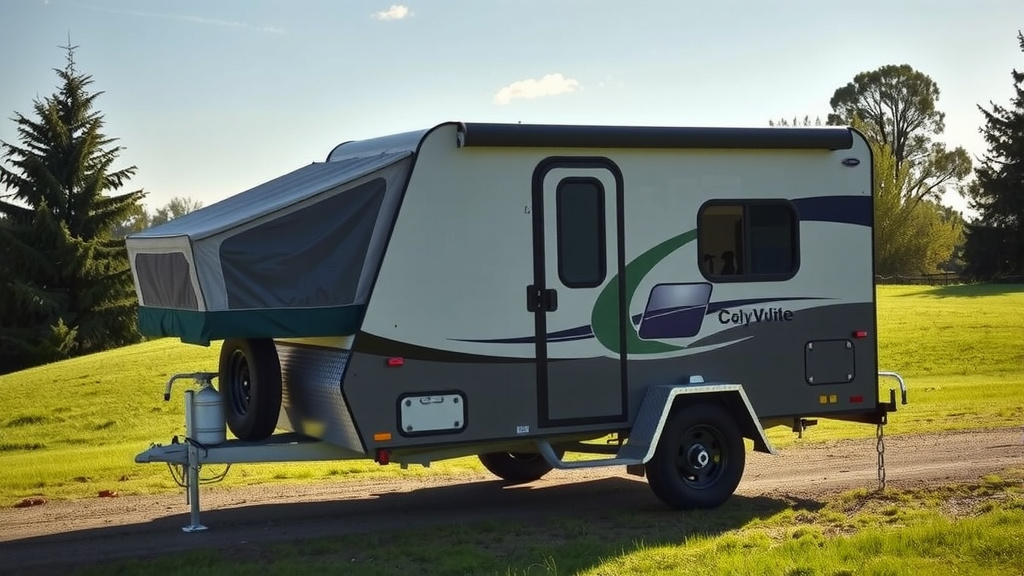
Checking Your Vehicle’s Towing Capacity
This is non-negotiable. Before you even fall in love with a tent trailer, you need to know what your car, SUV, or truck can safely tow. Your vehicle has a maximum towing capacity. Exceeding this is dangerous and can damage your vehicle.
Where to Find Your Vehicle’s Limits
You can typically find your vehicle’s towing capacity in a few places. Check your owner’s manual. There’s often a sticker on the driver’s side doorjamb. You can also find it on the manufacturer’s website. Many experts stress the importance of looking for both the maximum towing capacity and the maximum tongue weight capacity (NHTSA).
The Importance of the Yellow Sticker
Don’t overlook the yellow sticker on your trailer! This is the Federal Certification/Label. It provides the GVWR for that specific trailer. You’ll also find the GAWR (Gross Axle Weight Rating) and the vehicle’s VIN. This sticker is crucial for understanding the trailer’s maximum safe loaded weight.
Ready to Pack Your Bags (and Your Trailer!)
Understanding tent trailer weights is all about safety and enjoyment. It ensures you have a reliable setup for your adventures. Once you know the weights involved, you can confidently choose a trailer that fits your needs and your vehicle’s capabilities. We found that taking the time to do this homework makes for much happier camping.
- Know your vehicle’s towing capacity.
- Understand dry weight vs. GVWR.
- Calculate your estimated loaded trailer weight.
- Ensure your trailer’s GVWR exceeds your loaded weight.
- Check your trailer’s hitch weight.
- Always consult your vehicle and trailer manuals.
Conclusion
You’ve learned that tent trailer weights can vary widely, from a light 500 pounds to a hefty 3,000 pounds. Understanding the difference between dry weight and GVWR is essential for safe towing. Remember to always check your vehicle’s towing capacity before you shop. This research ensures your adventures are fun and safe. Your next step is to find a tent trailer that matches your vehicle’s limits and your travel style.
Frequently Asked Questions
What’s the lightest type of tent trailer?
Generally, the smallest and most basic pop-up campers are the lightest. These models often lack extensive amenities like built-in kitchens or bathrooms. We found they can start around 500 pounds in dry weight.
Can my small SUV tow a tent trailer?
It depends on your SUV’s specific towing capacity. Many smaller SUVs can tow lighter tent trailers, especially those under 2,000 pounds GVWR. Always check your vehicle’s owner’s manual or the doorjamb sticker for its maximum towing limit.
How much weight do water tanks add?
Water is surprisingly heavy! A 20-gallon freshwater tank, for instance, adds over 160 pounds when full. This significantly increases the trailer’s overall weight, so factor this into your loaded weight calculations.
Is hitch weight important for my towing vehicle?
Yes, hitch weight is very important. It’s the downward force the trailer places on your vehicle’s hitch. Typically, it’s about 10-15% of the trailer’s total loaded weight. Your vehicle has a specific limit for this tongue weight.
Where can I find a tent trailer’s GVWR?
You can find the GVWR on a yellow certification sticker usually located inside the trailer’s door jamb or on the trailer’s frame. This sticker also provides other important weight ratings for the trailer itself.


![7 Best Tarp For Under Tent [2026]](https://leonardhomeoutdoor.com/wp-content/uploads/2026/09/7-best-tarp-for-under-tent-2026-featured-768x432.jpg)

![7 Best Budget 3 Person Backpacking Tent [2026]](https://leonardhomeoutdoor.com/wp-content/uploads/2026/08/7-best-budget-3-person-backpacking-tent-2026-featured-768x432.jpg)
![7 Best Affordable Lightweight Tent [2026]](https://leonardhomeoutdoor.com/wp-content/uploads/2026/06/7-best-affordable-lightweight-tent-2026-featured-768x432.jpg)