
Canopy Tent vs Pole Tent: Which Is Right For You
Choosing between a canopy tent and a pole tent depends on your event’s needs and your budget. Canopy tents are generally easier to set up and more affordable for smaller gatherings, while pole tents offer a grander, open feel suitable for larger events but require more setup time and anchoring. We found that both have distinct advantages.
When planning an outdoor event, the tent structure plays a big role. A canopy tent often uses a frame for support, creating clear spans inside. Pole tents, conversely, rely on internal poles and external stakes. Many event planners consider the type of event and the desired atmosphere when making this choice.
- Canopy tents are quick to assemble.
- Pole tents provide a spacious, airy feel.
- Consider setup time and anchoring needs.
- Your budget will also guide the decision.
Let’s break down the key differences to help you decide which tent is the perfect fit for your next event.
Choosing Your Outdoor Event Tent: Frame vs. Pole
Deciding between a frame tent and a pole tent can feel like a big choice for your event. You want something that looks great and functions perfectly. We’ve found that understanding their core differences makes the decision much easier. Let’s look at how these two popular tent styles stack up against each other.
What is a Canopy Tent (Frame Tent)?
Think of a canopy tent, often called a frame tent, as a freestanding structure. It uses a metal framework to hold up the fabric. This framework is often made of aluminum or steel. You won’t find any center poles inside, giving you a lot more open space. We found that this makes them very versatile for different event layouts.
How Canopy Tents Work
The frame itself provides all the structural support. The fabric is then pulled over this frame and secured. Because they don’t need internal poles, you get a completely unobstructed view inside. This is a big plus for many event planners. Many guidelines suggest frame tents for events where you need maximum usable space.
Key Features of Frame Tents
- Freestanding design: They don’t rely on tension to stand.
- Clear interior space: No center poles to get in the way.
- Versatile anchoring: Can be secured with weights or stakes.
- Easier setup: Generally quicker to erect than pole tents.
Pros and Cons of Canopy Tents
One of the biggest advantages is the clear span interior. You can place tables, chairs, or stages anywhere without bumping into poles. We also found they are often easier and faster to set up, which can save on labor costs. This makes them a popular choice for weddings, parties, and corporate events.
However, they might not feel as grand or airy as a pole tent. The look can be a bit more modern and less traditional. Also, their freestanding nature means they might be more susceptible to wind if not properly anchored. We found that proper anchoring is always important, regardless of tent type.
What is a Pole Tent?
A pole tent, on the other hand, uses tension and a system of poles to stay up. It has a central, taller pole and side poles. Ropes and stakes are used to pull the fabric taut. This tension is what gives the tent its shape and stability. We found this creates a very classic and elegant look.
How Pole Tents Work
The fabric is secured to a center pole (or multiple poles) and then staked out to the ground. This creates a tensioned structure. The poles inside create a lovely, airy cathedral feel. Many event decorators love the height and open feeling these tents provide. We found that the peaked tops are instantly recognizable.
Key Features of Pole Tents
- Elegant, classic look: The high peaks and spacious interior are attractive.
- Spacious atmosphere: The interior feels open and airy.
- Requires staking: Must be secured to the ground with stakes.
- Needs clearance: Requires space around the perimeter for guy lines and stakes.
Pros and Cons of Pole Tents
The biggest appeal of a pole tent is its beautiful aesthetic. The soaring peaks and open interior can make any event feel more special. We found that many couples choose pole tents for their wedding reception for this reason. They tend to offer a more dramatic and classic presentation.
The main drawback is the setup. They typically require more time and labor to set up because of the extensive staking and pole system. You also need to be aware of the space needed for the guy ropes and stakes, which can eat into your usable area. They are also less flexible on certain surfaces. For example, you can’t easily set them up on asphalt without special anchoring systems. Many sources suggest they are best suited for grassy areas (National Fire Protection Association).
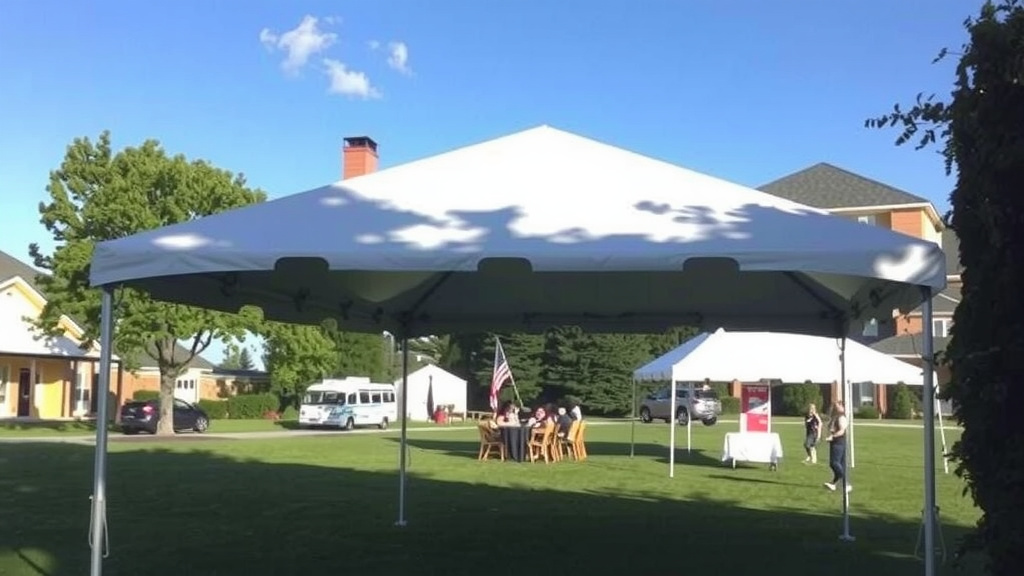
Comparing the Two: Key Differences at a Glance
Let’s put it side-by-side to make it easy to see. Both tent types have their strengths, and your event’s specific needs will point you in the right direction. We found that considering these points upfront saves a lot of hassle later.
| Feature | Canopy Tent (Frame Tent) | Pole Tent |
|---|---|---|
| Support Structure | Metal frame (like a building) | Center and side poles, tension from staking |
| Interior Space | Completely open, no obstructions | Center pole(s) can obstruct view and space |
| Setup Complexity | Generally easier and faster | More complex, takes longer |
| Anchoring | Can use weights or stakes | Requires stakes driven into the ground |
| Aesthetic | Modern, clean lines | Classic, elegant, airy |
| Surface Flexibility | Works well on various surfaces (grass, asphalt, concrete) | Best on grass; challenging on hard surfaces |
| Cost | Can be more affordable for smaller sizes | Often more cost-effective for very large structures |
Which Tent is Right for Your Event?
So, how do you make the final call? Think about what’s most important for your gathering. If you need a flexible space that can be set up quickly on almost any surface, a canopy tent is likely your winner. We found they’re great for backyard parties, markets, or anywhere ease of setup is a priority.
If you’re aiming for that wow factor with a beautiful, airy atmosphere and have a suitable location like a large lawn, a pole tent might be the perfect fit. Many experts suggest them for formal events like weddings and galas where the visual impact is key (The Knot).
Your Event Planning Checklist
To help you solidify your choice, ask yourself these quick questions:
- What is your budget for the tent rental?
- How much time do you have for setup and takedown?
- What surface will the tent be placed on?
- How important is an unobstructed interior space?
- What kind of atmosphere are you hoping to create?
- How large is your guest list?
Conclusion
You’ve seen how canopy tents and pole tents offer distinct advantages for your events. Canopy tents provide unmatched versatility with their freestanding design and clear interiors, perfect for quick setups on any surface. Pole tents, on the other hand, deliver a timeless elegance and airy atmosphere, ideal for creating a grand setting, especially on grass. We found that understanding these differences is key to selecting the right structure. Now, consider your event’s priorities: speed and flexibility, or classic beauty and open space. Your next step is to reach out to tent rental companies with a clear idea of your needs!
Frequently Asked Questions
Can I set up a pole tent on my paved driveway?
Setting up a pole tent on a paved surface like a driveway is challenging. Pole tents rely heavily on stakes driven into the ground for stability. While special anchoring systems exist for hard surfaces, they add complexity and cost. Generally, pole tents are best suited for grassy areas.
Which tent type is easier to clean around the edges?
Canopy tents tend to be easier to clean around the edges. Because they don’t have the numerous guy ropes and stakes that pole tents require, there’s less to navigate when tidying up the perimeter. The frame structure also keeps the fabric more taut, which can help prevent debris from accumulating underneath.
Will a canopy tent feel less stable in windy conditions than a pole tent?
Both tent types need proper anchoring to withstand wind, but their stability mechanisms differ. Canopy tents, being freestanding, rely on their frame and secure weighting or staking. Pole tents use tension from staking and guy lines. We found that a well-anchored pole tent can be very stable, but its many stake points might offer more individual resistance points compared to the frame of a canopy tent.
How much more time does setting up a pole tent typically take?
You can expect setting up a pole tent to take significantly more time than a canopy tent. This is due to the process of raising the poles, carefully positioning the fabric, and then staking out all the guy lines. We’ve seen that a simple canopy tent can often be erected in a fraction of the time, especially for smaller sizes.
Are canopy tents more suitable for temporary market stalls?
Yes, canopy tents are often more suitable for temporary market stalls. Their ease of setup and takedown, combined with their ability to be anchored on various surfaces like asphalt or concrete using weights, makes them ideal for businesses that need to set up and pack down frequently. Their unobstructed interior also allows for flexible display arrangements.
![7 Best Family Waterproof Tents [2026]](https://leonardhomeoutdoor.com/wp-content/uploads/2026/08/7-best-family-waterproof-tents-2026-featured-768x432.jpg)
![7 Person Lightweight Tent [2026]](https://leonardhomeoutdoor.com/wp-content/uploads/2026/08/7-person-lightweight-tent-2026-featured-768x432.jpg)
![7 Best Lay Flat Hammock Tent [2026]](https://leonardhomeoutdoor.com/wp-content/uploads/2026/08/7-best-lay-flat-hammock-tent-2026-featured-768x432.jpg)
![7 Season Tent For Hunting [2026]](https://leonardhomeoutdoor.com/wp-content/uploads/2026/08/7-season-tent-for-hunting-2026-featured-768x432.jpg)
![7 Person Cot Tent [2026]](https://leonardhomeoutdoor.com/wp-content/uploads/2026/08/7-person-cot-tent-2026-featured-768x432.jpg)