How Hot Should a Grow Tent Be?
The ideal temperature for your grow tent is generally between 70°F and 85°F (21°C to 29°C). This range promotes healthy plant growth and prevents heat stress. Keeping your tent within this zone is key for successful indoor gardening.
Maintaining the right temperature helps your plants photosynthesize efficiently and absorb nutrients. Too hot, and they’ll suffer. Too cold, and growth slows down considerably. We found that consistency is really important here.
- Ideal grow tent temp: 70-85°F (21-29°C).
- This temp range helps plants grow and eat.
- Too hot or cold will stunt your plant’s growth.
- Monitoring and control are essential.
Let’s walk through exactly why this temperature range is so important and how you can achieve it in your own grow tent.
Ideal Temperatures for Your Grow Tent Environment
You’re aiming for a sweet spot between 70°F and 85°F (21°C to 29°C) for your plants. This range is like a perfect spring day for them. It allows them to perform all their plant-y jobs efficiently. Think of it as Goldilocks’s porridge – not too hot, not too cold, but just right for robust growth and happy foliage.
Why is this range so important? Well, plants have a prime temperature for photosynthesis. This is the process where they convert light into energy. When the temperature is in the ideal zone, this process hums along beautifully. We found that keeping this temperature consistent is even more beneficial than a slight variation.
Understanding Plant Temperature Needs
The Science Behind the Temperature Sweet Spot
Plants are sensitive to temperature fluctuations. When it gets too hot, they start to shut down. Their stomata (tiny pores on their leaves) close up to conserve water. This also stops them from taking in the CO2 they need to grow. It’s like trying to breathe with your mouth closed on a hot day!
Conversely, if it gets too cold, their metabolism slows down dramatically. Nutrient uptake becomes sluggish. Growth can stall for days or even weeks. Research and studies consistently show that temperatures below 65°F (18°C) can really hinder development (NCBI).
Many plant physiologists agree that this 70-85°F range supports optimal enzymatic activity. These enzymes are the workers inside the plant cells. They drive all the essential processes, from building new leaves to flowering.
How Temperature Affects Different Growth Stages
Seedlings and young plants are a bit more delicate. They generally prefer the cooler end of the spectrum, perhaps 70-75°F (21-24°C). This helps prevent them from stretching too much or becoming leggy.
As plants mature and enter their flowering or fruiting stages, they can often tolerate slightly warmer temperatures. The upper end of the range, 80-85°F (27-29°C), can sometimes encourage faster development. However, it’s still crucial to monitor them closely at these higher temps.
We’ve seen growers find success by slightly adjusting temperatures based on their specific plant’s needs. Some strains might naturally prefer slightly warmer or cooler conditions. It pays to know your plants!
Factors Influencing Your Grow Tent’s Temperature
Lighting: The Heat Generator
Your grow lights are often the biggest source of heat in a tent. High-intensity discharge (HID) lights, like Metal Halides (MH) and High-Pressure Sodium (HPS), produce a lot of heat. Even powerful LEDs can contribute warmth.
The wattage and type of light are key factors. A 1000W HID light will obviously generate more heat than a 300W LED. You need to account for this when planning your setup.
We found that the distance of your lights from your plants also plays a role. Closer lights mean more direct heat transfer. Make sure your lights are at the appropriate hanging height for your plants’ stage of growth.
Ventilation: Your Climate Control System
A good ventilation system is non-negotiable for temperature control. It involves an intake fan and an exhaust fan. The exhaust fan pulls hot air out of the tent. The intake fan brings fresh, cooler air in.
The size of your fans matters. An undersized fan won’t be able to effectively exchange the air. This will lead to heat buildup. You want fans rated for the cubic feet per minute (CFM) of your tent’s volume.
Air circulation within the tent is also important. Oscillating fans help distribute air evenly. This prevents hot spots and ensures all your plants get consistent airflow. Good circulation can also help reduce humidity.
Ambient Room Temperature: The Outside Influence
The temperature of the room your grow tent is in directly affects your tent’s internal temperature. If your grow room is in a hot attic or a cold basement, it will be harder to regulate your tent’s climate.
Consider the time of year and your location. Summer months will naturally bring higher ambient temperatures. Winter can bring much colder temperatures. You may need to adjust your equipment accordingly.
Monitoring and Adjusting Your Grow Tent Temperature
Essential Tools for Temperature Tracking
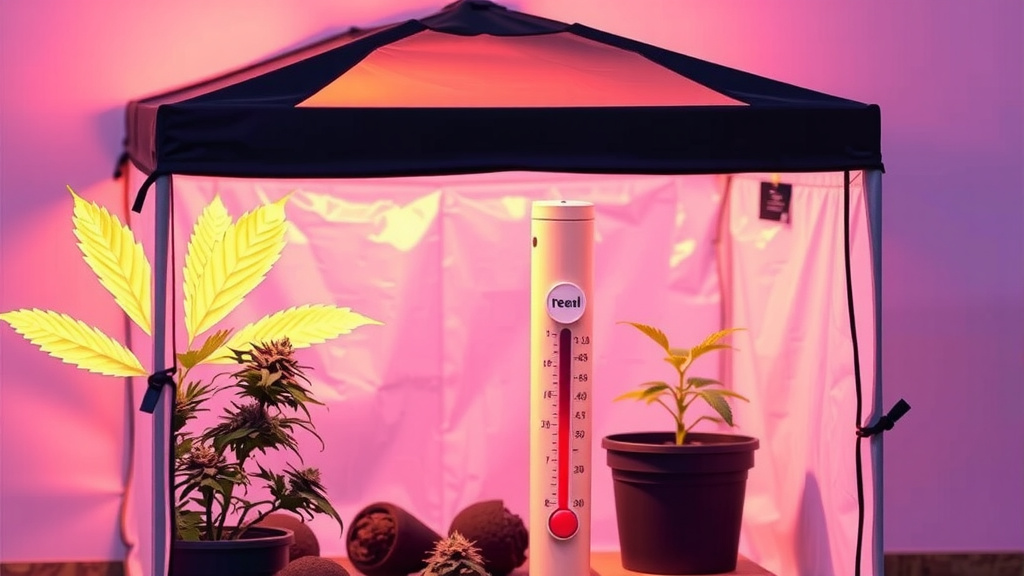
A reliable thermometer is your best friend. Digital thermometers with hygrometers are excellent. They measure both temperature and humidity. Many also have a min/max feature, showing you the highest and lowest temperatures reached.
Placing your thermometer at canopy level is usually best. This is where your plants are actively growing. You want to know the temperature they are experiencing. Avoid placing it right near the lights or directly in front of an exhaust fan.
Consider using multiple thermometers if you have a larger tent. This helps you identify any temperature gradients.
Strategies for Cooling Your Tent
If your tent is too hot, your first step is usually checking your ventilation. Ensure your exhaust fan is running properly and is sized correctly. Many growers use a timer to control their fans.
You might need to upgrade your exhaust fan or add a carbon filter. Carbon filters can add some resistance to airflow, so ensure your fan can handle it. You can also try opening vents on your tent for passive intake if your exhaust fan is strong enough.
Another trick is to vent your lights directly outside the tent. This removes heat before it can build up inside. Light-cooling hoods or air-cooled reflectors can help with this.
Strategies for Warming Your Tent
If your tent is too cold, especially in winter, you have a few options. You can add a small, dedicated space heater designed for grow tents. These are often thermostat-controlled.
Heated grow mats can warm the roots, which is beneficial for seedlings. You can also adjust your lighting schedule. Running your lights during the cooler parts of the day might help.
We found that checking your ambient room temperature is key here. If the room is consistently too cold, you might need to improve the room’s insulation or heating. This is often a more energy-efficient solution long-term.
A Quick Checklist for Optimal Grow Tent Temps
- Monitor temperature daily with a reliable thermometer.
- Ensure your exhaust fan is adequately sized for your tent.
- Check light distance and consider air-cooling options.
- Adjust ventilation settings based on current temperature.
- Consider supplemental heating or cooling if needed.
- Keep plants at canopy level for accurate readings.
Conclusion
You’ve learned that maintaining your grow tent between 70°F and 85°F (21°C to 29°C) is vital for happy, healthy plants. This temperature sweet spot ensures optimal photosynthesis and nutrient uptake. Remember, consistency is your ally in preventing heat stress or growth slowdowns.
By understanding how lighting, ventilation, and ambient room temperature affect your tent’s climate, you can make informed adjustments. Invest in a good thermometer and be ready to tweak your setup. Your next step? Implement these strategies and monitor your tent’s environment closely to give your plants the best possible conditions.
Frequently Asked Questions
What’s the absolute worst that can happen if my grow tent gets too hot?
If your grow tent consistently exceeds 85°F (29°C), your plants will likely experience heat stress. This means their stomata will close, halting CO2 intake and growth. You might also see wilting or damaged leaves.
Is it okay if my grow tent temperature fluctuates slightly day and night?
Some minor fluctuation is generally okay, but extreme swings aren’t ideal. Research shows that plants benefit most from consistent temperatures within their preferred range. Aim for stability, but don’t panic over a degree or two.
How can I tell if my grow tent is too cold for my plants?
If your grow tent is too cold (below 65°F or 18°C), you’ll likely notice stunted growth. Plants may appear sluggish, and their nutrient uptake will slow down considerably. Leaves might also look a bit droopy or discolored.
Can I use a regular home thermostat to control my grow tent temperature?
While a thermostat is essential for heating or cooling devices, a grow tent needs its own direct monitoring. A simple digital thermometer with a hygrometer placed inside the tent at canopy level is your best bet for accurate readings.
What’s the difference in temperature needs between seedlings and mature plants?
Seedlings are more delicate and generally prefer the cooler end of the ideal range, around 70-75°F (21-24°C), to prevent leggy growth. Mature plants, especially during flowering, can often tolerate and even thrive in the warmer part of the range, 80-85°F (27-29°C).

![7 Best Affordable Roof Top Tent [2026]](https://leonardhomeoutdoor.com/wp-content/uploads/2026/06/7-best-affordable-roof-top-tent-2026-featured-768x432.jpg)

![7 Person Tent 4 Season [2026]](https://leonardhomeoutdoor.com/wp-content/uploads/2026/08/7-person-tent-4-season-2026-featured-768x432.jpg)