
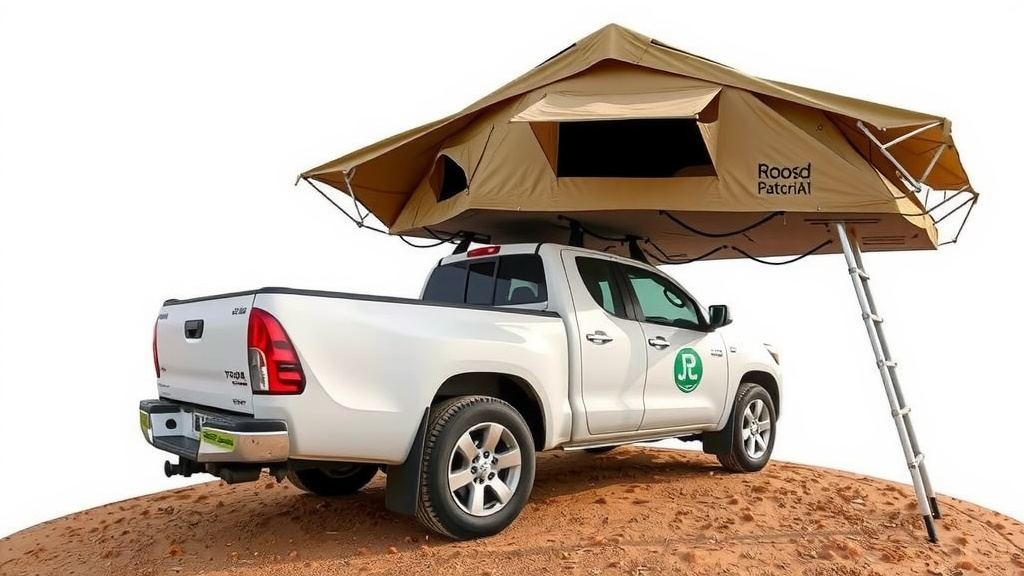
Truck Bed Tent vs Rooftop Tent: Which Is Best for Camping
Deciding between a truck bed tent and a rooftop tent depends on your adventure style and budget. Truck bed tents are generally more affordable and set up right in your truck bed, offering a quick camping solution. Rooftop tents often provide more space and can be set up on vehicles without truck beds, but usually come with a higher price tag.
Both offer a fantastic way to camp off the ground, keeping you away from creepy crawlies and uneven terrain. Many adventurers find truck bed tents to be a great entry point into vehicle camping due to their ease of use and lower cost. Rooftop tents, on the other hand, are often favored for their convenience on longer trips and their ability to deploy on a wider range of vehicles. Our guide to the best cars for rooftop tent camping can help you choose the right vehicle.
- Truck bed tents are cheaper and easier to set up.
- Rooftop tents offer more space and fit more vehicles.
- Both keep you off the ground.
- Consider your budget and camping needs.
We found that understanding a few key differences can really help you choose the right one. Let’s break down what each has to offer.
Choosing Between Truck Bed Tents and Rooftop Tents
So, you’re thinking about upgrading your camping game with some vehicle-based shelter. That’s awesome! It really opens up new possibilities for adventure. But now you’re staring down two main options: the humble truck bed tent and the more adventurous rooftop tent. They both promise off-the-ground sleeping, but they get you there in very different ways. Let’s figure out which one is your perfect match. To help decide, consider a camper shell and rooftop tent comparison.
Understanding Truck Bed Tents: The Quick and Easy Setup
Think of a truck bed tent as a traditional tent that just happens to live in your truck bed. It’s designed to fit snugly within the confines of your truck’s bed, using its walls for support. They’re super straightforward to set up. You basically just pop it up over your truck bed, and you’re good to go. Most models are designed to be weather-resistant, keeping you dry and protected.
Pros of Truck Bed Tents
The biggest draw here is definitely the affordability. These tents are generally much cheaper than their rooftop counterparts. We found that many are priced under $300, making them an excellent entry point for budget-conscious campers. Setup is also incredibly fast. You can often have it up and ready in under 15 minutes, which is a huge plus after a long day of driving.
- Cost-effective: Significantly lower price point.
- Speedy setup: Get camping faster.
- Convenience: No need to lug a separate sleeping setup.
- Lower profile: Less wind resistance when driving.
Cons of Truck Bed Tents
The main limitation is, of course, that you need a truck. Not just any truck, either; the tent has to match your truck bed size (short bed, long bed, etc.). We also found that while they offer decent ground clearance, they won’t get you as high off the terrain as a rooftop tent. This means you might still be dealing with some uneven ground or debris if you’re not careful where you park. Also, sleeping space can sometimes feel a bit cramped, especially for taller individuals.
- Requires a compatible truck bed.
- Limited by truck bed size.
- Ground clearance is less than rooftop tents.
- Can feel tight for sleeping.
Exploring Rooftop Tents: The Elevated Camping Experience
Rooftop tents (RTTs) are like a hard-sided or soft-sided camper that mounts directly onto your vehicle’s roof rack. They offer a raised sleeping platform, giving you a commanding view of your surroundings. Setting them up involves unfolding the tent, and often a ladder is included for access. Many people love the feeling of sleeping high above the ground.
Pros of Rooftop Tents
One of the biggest advantages is that RTTs can be mounted on a wider variety of vehicles, including SUVs, vans, and cars, as long as they have a sturdy roof rack system. We found they offer a generally more spacious sleeping area than truck bed tents. Plus, the elevation means you’re completely removed from the ground, keeping you away from insects, small animals, and water runoff. The view from your tent is often spectacular, too!
- Fits on various vehicles (SUVs, vans, etc.).
- More sleeping space available.
- Excellent protection from ground-level critters and weather.
- Offers great views and a sense of security.
Cons of Rooftop Tents
The most significant hurdle for most people is the price. Rooftop tents are a considerable investment, often starting at $1,000 and going up from there. Installation can also be more involved. You need a robust roof rack capable of supporting the weight of the tent plus occupants. We also found that setting up and taking down an RTT can take a bit longer than a truck bed tent, especially for newer users. It also adds considerable weight and height to your vehicle, affecting fuel economy and garage clearance.
- Higher cost, often $1,000+.
- Requires a strong, compatible roof rack.
- Setup can be more time-consuming.
- Impacts vehicle’s fuel efficiency and height.
Key Differences at a Glance
To help you visualize, let’s put some of the main differences side-by-side. This should make it easier to see how each option stacks up against your personal camping needs.
| Feature | Truck Bed Tent | Rooftop Tent |
|---|---|---|
| Price Range | $$ (Generally under $300) | $$$$ (Often $1,000+) |
| Vehicle Compatibility | Specific truck beds only | Most vehicles with a roof rack |
| Setup Time | Very quick (under 15 min) | Moderate (15-30 min) |
| Ground Clearance | Low (uses truck bed height) | High (elevated significantly) |
| Space/Comfort | Can be cozy; depends on truck size | Generally more spacious; comfortable mattress often included |
| Portability | Stays on the truck bed | Requires removal/installation (heavy) |
Who is Each Tent Best For?
So, who should lean towards which option? If you’re a weekend warrior with a truck, and your main goal is to get camping quickly and affordably, a truck bed tent is likely your best bet. You can easily go from work to the campsite without a fuss. Truck owners who want to keep their camping setup simple and cost-effective will find a lot to love here. It’s a fantastic way to get started with overland or car camping.
On the other hand, if you have an SUV or van, or if you prioritize having the most comfortable and convenient sleeping setup possible, and your budget allows, a rooftop tent might be calling your name. They’re great for longer trips where you might be moving camp more often or for those who enjoy the security and view of being elevated. Serious overlanders and frequent travelers often find RTTs worth the investment for their ease of use once set up and their durability.
Making Your Final Decision: A Quick Checklist
Before you hit that buy button, ask yourself these quick questions:
- Do you own a truck, or are you open to using other vehicles?
- What’s your absolute maximum budget for camping gear?
- How much time are you willing to spend setting up and packing down camp?
- How important is sleeping completely off the ground versus just above it?
- Are you looking for the simplest, quickest setup, or the most spacious and elevated experience?
- Do you have a way to securely mount a rooftop tent if you choose that route?
Conclusion
Choosing between a truck bed tent and a rooftop tent really boils down to your personal adventure style and budget. We’ve seen that truck bed tents offer an affordable and quick way to get off the ground, perfect for truck owners seeking simplicity. Rooftop tents, on the other hand, provide more space and versatility for different vehicles, though they come with a higher investment. Consider how you’ll use your camping setup most often. For your next trip, ask yourself these key questions to ensure you pick the tent that best fits your camping dreams.
Frequently Asked Questions
Can I use a truck bed tent if I don’t have a truck?
No, truck bed tents are specifically designed to fit within the bed of a pickup truck. They use the truck bed walls for support. If you don’t have a truck, you’ll need to look at other camping options like rooftop tents, ground tents, or car camping setups.
Do rooftop tents require special roof racks?
Yes, rooftop tents require a strong and compatible roof rack system. The rack must be rated to support the weight of the tent itself, plus the weight of people sleeping inside. It’s essential to check your vehicle’s roof load capacity and ensure your rack is up to the task.
Are truck bed tents waterproof?
Most truck bed tents are designed to be weather-resistant and will keep you dry in moderate rain. However, like any tent, extreme weather conditions can test their limits. We recommend checking individual product reviews for specific waterproofing capabilities and considering a tarp for extra protection if you expect heavy rain.
How much fuel economy do I lose with a rooftop tent?
You will likely experience a noticeable decrease in fuel economy with a rooftop tent. The added weight and increased aerodynamic drag, especially when the tent is closed, mean your engine has to work harder. The exact impact varies depending on the tent and your vehicle, but expect it to affect your MPG.
Can I leave a truck bed tent set up all the time?
While you can technically leave a truck bed tent set up, it’s generally not recommended for long-term storage. Leaving it exposed to the elements can degrade the fabric and shorten its lifespan. Plus, it makes your truck less functional for everyday use and more vulnerable to theft or vandalism.
![7 Best Air Conditioner For Grow Tent [2026]](https://leonardhomeoutdoor.com/wp-content/uploads/2026/07/7-best-air-conditioner-for-grow-tent-2026-featured-768x432.jpg)

![7 Person Tent For Camping [2026]](https://leonardhomeoutdoor.com/wp-content/uploads/2026/08/7-person-tent-for-camping-2026-featured-1-768x432.jpg)