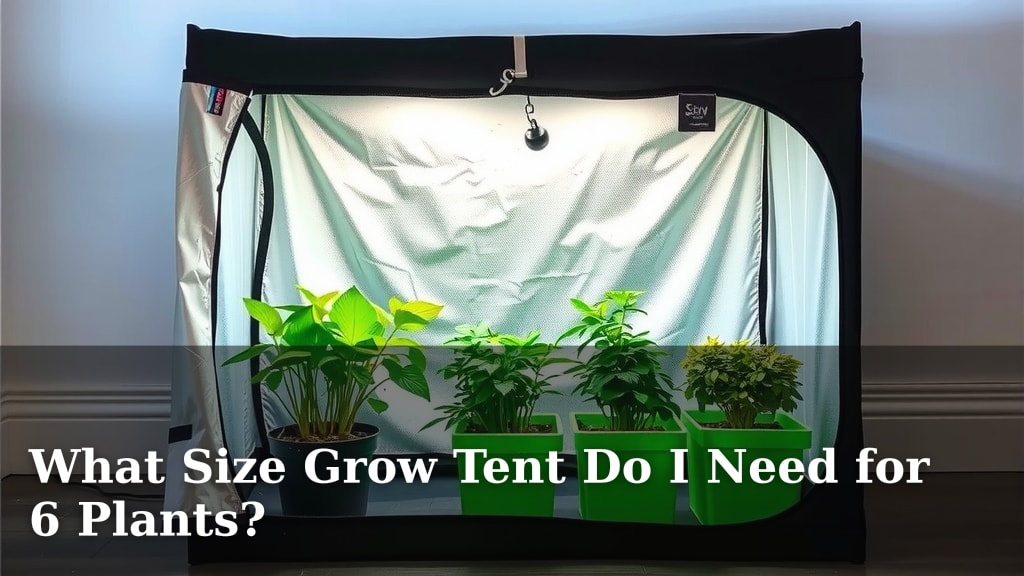
What Size Grow Tent Do I Need for 6 Plants?
Choosing the right size grow tent for six plants depends on their size and the type of lights you use. Generally, a 4×4 foot or 5×5 foot tent is a good starting point. This gives each plant enough space to grow without becoming overcrowded. You want to avoid a tent that’s too small, as this can lead to poor air circulation and unhappy plants.
When planning your grow tent setup, think about more than just the number of plants. Consider the vegetative stage versus the flowering stage, as plants grow much larger when flowering. Your lighting choice also impacts space needs; powerful lights can require more vertical clearance. We found that many growers underestimate the final size of their plants, so planning for a little extra room is always wise.
TL;DR:
- For 6 plants, aim for a 4×4 or 5×5 foot grow tent.
- Consider plant size and light type.
- More space is better than too little.
- Plants need more room during flowering.
- Factor in light heat and height needs.
Let’s walk through exactly how to pick the perfect size for your six green friends, ensuring they have plenty of room to thrive.
Choosing the Right Grow Tent Dimensions for Six Plants
When you’re planning your indoor garden for six plants, the tent size is a really important decision. We found that growers often underestimate how much space their plants will actually need. Picking a tent that’s too small can lead to a lot of problems down the road. Think of it like trying to fit six big dogs into a small car for a long trip – everyone gets cramped and uncomfortable!
Understanding Plant Needs: Space is Key
Each plant needs its own personal space to grow healthy roots and leaves. This space allows for good airflow, which is critical for preventing mold and pests. For six plants, you generally want a tent that provides at least 2 to 3 square feet per plant. This might seem like a lot, but it accounts for their growth during both the vegetative and flowering stages.
The Minimum Recommended Tent Size
Based on our research and what experienced growers tell us, a 4×4 foot grow tent is often considered the absolute minimum for six plants. This gives you about 16 square feet of growing area. While this can work, especially if you manage your plants carefully, it can feel a bit snug during peak flowering. Many growers find they wish they had a little more room in a tent this size.
The Ideal Grow Tent Size for Six Plants
For a more comfortable and productive setup with six plants, we highly recommend a 5×5 foot grow tent. This offers 25 square feet of space, giving each plant a bit more breathing room. This extra space is incredibly helpful for:
- Better Air Circulation: Less chance of stagnant air, which means healthier plants.
- Easier Maintenance: You can access your plants more easily for watering, pruning, and training.
- Reduced Stress: Plants that aren’t overcrowded are generally less stressed and grow better.
- More Light Penetration: Light can reach more parts of the plant, leading to fuller growth.
Many growers who start with a 4×4 tent for six plants end up upgrading to a 5×5 or even a 4×8 later on. We found that investing in the larger size upfront saves time and frustration.
Factors Influencing Your Grow Tent Size Choice
It’s not just the number of plants that dictates your tent size. Several other factors play a big role in determining the best dimensions for your specific needs. Let’s break them down.
Plant Size and Strain Variation
Not all plants are created equal! Some strains naturally grow much larger and bushier than others. Indica-dominant strains tend to be shorter and denser, while sativa-dominant strains often grow taller and more spread out. Before you buy a tent, research the typical mature size of the strains you plan to grow.
For example, six small autoflowering plants might do okay in a 4×4. However, six large, bushy photoperiod plants, especially during their flowering phase, will likely feel very cramped. We found that growers who choose indica or indica-dominant hybrids often need less horizontal space than those growing tall sativas.
Lighting Type and Heat Output
Your grow lights have a significant impact on space requirements, especially vertical space. LED grow lights are popular because they produce less heat than older HID (High-Intensity Discharge) lights like Metal Halides (MH) or High-Pressure Sodium (HPS) lamps. High-powered lights, regardless of type, generate heat that needs to be managed.
Tents with powerful lights require more vertical clearance to keep the heat away from your plants. If you’re using air-cooled reflectors or powerful HPS lights, you might need a taller tent than someone using efficient LEDs. We found that adequate height is often overlooked, leading to plants being scorched by lights.
Growth Stage: Vegetative vs. Flowering
Plants change dramatically between their vegetative and flowering stages. During the vegetative phase, plants focus on growing roots and leaves, staying relatively compact. However, once they enter the flowering stage, they often stretch considerably and fill out with buds.
You need to plan your tent size based on the plants’ maximum size, which is typically during peak flower. A tent that looks spacious during the vegetative stage can quickly become overcrowded as flowering progresses. We recommend planning for at least 50% more space than you think you’ll need during the vegetative stage.
Training Techniques and Plant Management
The way you train your plants can also affect how much space they need. Techniques like Low-Stress Training (LST), Screen of Green (ScrOG), or topping can help manage plant height and spread. If you plan to use these methods, you might be able to get away with a slightly smaller tent.
For instance, a ScrOG setup uses a net to spread plants out horizontally, which can make better use of tent space. However, even with training, six plants will still require a decent footprint. Many experts suggest that training methods help optimize yield per square foot, but don’t entirely eliminate the need for ample space for airflow and light penetration (NCBI).
Putting It All Together: Your Grow Tent Checklist
Choosing the right tent size ensures your plants have the best chance to flourish. Here’s a quick checklist to help you decide:
- Count your plants: You’re planning for six.
- Consider strain size: Are they naturally big or small?
- Measure your lights: How much heat and vertical space do they need?
- Think about growth stages: Plan for the flowering phase’s maximum size.
- Factor in airflow: Ensure plenty of room for air to circulate.
- Decide on training: Will you use techniques to manage size?
Tent Size Comparison Table
Here’s a simple comparison to help visualize the space for six plants. Remember, these are general guidelines, and your specific setup might require adjustments.
| Tent Size (Footprint) | Total Square Footage | Suitability for 6 Plants | Pros | Cons |
|---|---|---|---|---|
| 4×4 ft | 16 sq ft | Minimum / Tight | More affordable, easier to fit in smaller rooms. | Can be overcrowded, limited airflow, challenging maintenance during flower. |
| 5×5 ft | 25 sq ft | Recommended / Ideal | Good space for airflow, easier access, healthier plant growth, better yields. | Slightly larger footprint, potentially higher cost. |
| 4×8 ft | 32 sq ft | Ample Space / Luxurious | Excellent airflow, very easy maintenance, great for larger plants or more training. | Requires significant room space, higher cost, might be overkill for small plants. |
We consistently found that growers are happiest when they choose the 5×5 tent for six plants. It strikes a great balance between space, cost, and manageability. This allows your plants to reach their full potential without feeling like they’re in a crowded concert hall!
Conclusion
Choosing the right size grow tent for your six plants is a key step toward a successful harvest. While a 4×4 foot tent can work, we found that a 5×5 foot tent typically offers the best balance of space, airflow, and ease of use for this number of plants. Remember to consider your specific strains, lighting, and training methods. Don’t underestimate how much plants grow, especially in flower. Invest a little more in space upfront to save yourself headaches later. Your next step? Measure your available space and order that 5×5 tent!
Frequently Asked Questions
Can I really fit 6 plants in a 4×4 tent?
Yes, you can fit six plants in a 4×4 tent, but it will be snug, especially during the flowering stage. You’ll need to be diligent with plant training and pruning to manage their size and ensure good airflow. Many growers find it challenging and wish they had more space.
How does the light type affect my tent size needs?
More powerful lights, like HPS or MH, produce more heat and often require more vertical space to prevent burning your plants. LEDs are generally more heat-efficient and can allow for slightly more compact setups, but you still need to account for their footprint and any necessary airflow equipment.
Will my autoflowering plants need less space than photoperiod plants?
Generally, yes. Autoflowering plants typically stay smaller and have a shorter life cycle, meaning less time spent in their largest growth phase. Six smaller autoflowers might manage in a 4×4 tent, whereas six large photoperiod strains will likely need at least a 5×5 or larger.
What if I plan to use training techniques like ScrOG?
Training techniques like ScrOG can help manage plant height and spread, allowing you to maximize your canopy within a given space. While this can make a slightly smaller tent more feasible, you still need adequate room for airflow and light penetration around each plant. A 5×5 tent still provides more comfort and better results even with training.
Can I put plants of different sizes in the same tent?
It’s generally best to try and keep plants of similar sizes together for even growth and light exposure. Mixing very large and very small plants in a tent for six can lead to competition for light and resources, and potentially overcrowding for the smaller ones if you’re trying to accommodate the larger ones.
![7 Best Air Tent For Camping [2026]](https://leonardhomeoutdoor.com/wp-content/uploads/2026/07/7-best-air-tent-for-camping-2026-featured-768x432.jpg)
![7 Best Backpacking Tent For The Money [2026]](https://leonardhomeoutdoor.com/wp-content/uploads/2026/06/7-best-backpacking-tent-for-the-money-2026-featured-768x432.jpg)