
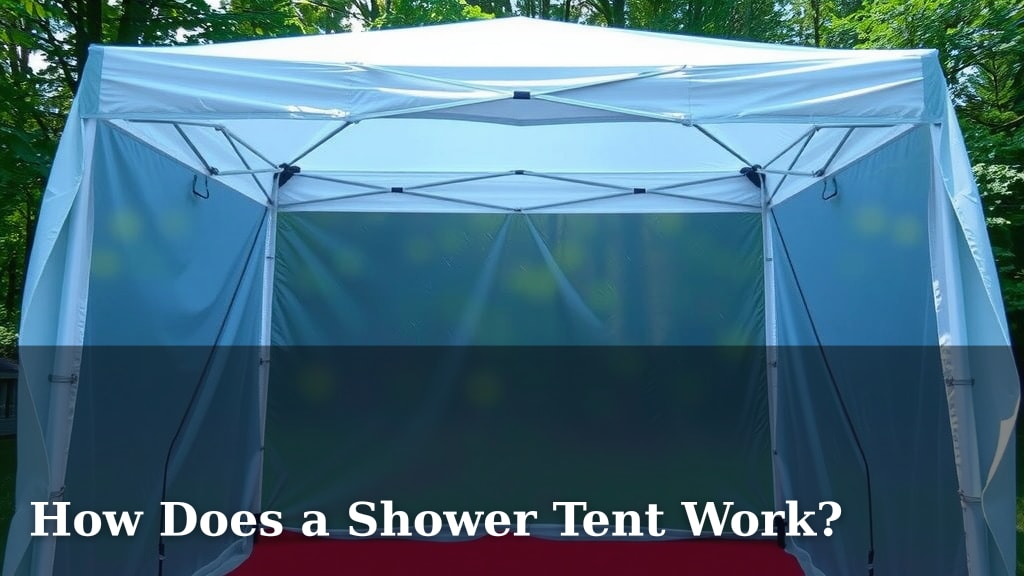
How Does a Shower Tent Work?
A shower tent works by creating a private, enclosed space that shields you from the elements. It typically features a waterproof fabric and a frame for setup. This design offers shelter for showering or changing outdoors.
We found that these tents are incredibly useful for camping or beach trips. They provide a much-needed barrier for personal activities in public or exposed settings. Think of it as your personal, portable changing room or bathroom.
- Provides privacy for showering and changing.
- Protects you from wind and rain.
- Easy to set up and take down.
- Made from durable, waterproof materials.
Let’s walk through exactly how a shower tent keeps you comfortable and dry when you’re out and about.
Understanding How Shower Tents Function
A shower tent essentially acts as your own private portable bathroom. It’s designed to give you the comfort and privacy you need when a traditional bathroom isn’t available. We’ve found they’re a favorite among campers, RVers, and even beach-goers for good reason.
The Basic Structure: Frame and Fabric
At its core, a shower tent is a simple setup. You’ll typically find a sturdy frame, often made of flexible poles. These poles connect to create the tent’s shape. Then, there’s the fabric, which is usually a water-resistant or waterproof material. This combination creates an enclosed space.
Think of it like a pop-up tent, but with a specific purpose. The frame provides the structure, holding the walls and roof up. The fabric forms these walls and roof, keeping the elements out and your personal space in.
Materials Matter: Waterproofing and Durability
The materials used are key to a shower tent’s function. Most are made from nylon or polyester. These fabrics are chosen for their ability to repel water. Many feature a special coating or treatment to enhance their waterproof capabilities.
We’ve seen many tents with a hydrostatic head rating. This number indicates how much water pressure the fabric can withstand before it starts to leak. A higher rating means better waterproofing. You’ll also find reinforced stitching and sealed seams. These details prevent water from seeping through the weakest points.
Ventilation: Keeping it Fresh
One common concern is ventilation. After all, you don’t want your private space to become a steamy, stuffy box. Many shower tents are designed with this in mind. You’ll often find mesh windows or vents at the top of the tent. These allow for airflow.
This airflow is crucial for several reasons. It helps to reduce condensation inside the tent. It also prevents the air from becoming too humid. Good ventilation ensures a more comfortable experience when you’re showering or changing.
Setup and Portability
Setting up a shower tent is usually quite straightforward. Most designs are engineered for quick assembly. You typically insert the poles into sleeves or attach them to connectors. Then, you raise the frame and attach the fabric. Many tents come with guy lines and stakes for added stability.
Taking them down is just as simple. You reverse the assembly process. The tent then folds or rolls up. It usually fits into a carrying bag. This makes it easy to transport and store when not in use. Many users find this portability to be a major advantage.
Key Components and Their Roles
The Frame: Giving it Shape and Stability
The frame is the skeleton of your shower tent. It’s what gives the tent its structure and allows it to stand on its own. Most frames are made from lightweight but strong materials like fiberglass or aluminum. These materials are chosen for their flexibility and durability.
The poles often come in sections that snap together. This makes assembly quicker and more intuitive. Some designs might use a more rigid, scissor-like mechanism for instant pop-up action. Whatever the design, the frame’s main job is to hold the tent upright and create that enclosed space.
The Walls and Roof: Your Personal Enclosure
The fabric walls and roof are what truly create your private sanctuary. As we touched on, these are typically made from water-resistant materials. They act as a barrier between you and the outside world. This keeps you dry from rain or splashes and provides essential privacy.
Some tents feature a solid roof, while others might have a mesh top. The mesh roof can allow for light and ventilation. A solid roof offers more protection from direct sun or rain. You’ll find that the height and width of the tent are important considerations for comfort.
The Floor: Protection Underfoot
Not all shower tents have a built-in floor. Some models are designed to be used directly on the ground. Others include a fabric floor, often made from a heavier-duty, waterproof material. A floor can help keep mud and water out.
If your tent doesn’t have a floor, you might want to consider bringing a separate mat or tarp. This can make the experience more comfortable and cleaner. A floor also adds a bit of extra privacy by blocking visibility from below.
Doors and Windows: Access and Airflow
Access to your shower tent is usually through a zippered door. These doors are designed to seal shut, maintaining privacy and keeping water out. Many doors have a flap or overhang above them to prevent rain from dripping in when opened.
Windows, as mentioned, are often made of mesh. They are crucial for ventilation. Some windows might have a flap you can close from the inside. This offers a balance between privacy and airflow. We found that tents with multiple windows or vents tend to be more comfortable.
| Feature | Purpose | Why It Matters |
|---|---|---|
| Waterproof Fabric | Keeps water out | Essential for showering and rain protection. |
| Sturdy Frame | Provides structure | Keeps the tent standing and stable. |
| Ventilation Openings | Allows airflow | Reduces humidity and prevents stuffiness. |
| Zippered Door | Provides access and privacy | Ensures a secure and private entry/exit. |
| Built-in Floor (Optional) | Keeps ground moisture out | Enhances comfort and cleanliness. |
Added Conveniences: Pockets and Hooks
Many shower tents include thoughtful extras. You might find small pockets sewn into the inner walls. These are perfect for holding toiletries like soap, shampoo, or a washcloth. Some tents also have hooks. These can be used to hang a shower bag, a towel, or even a battery-powered light.
These little additions make a big difference. They help keep your essentials organized and within easy reach. It means less fumbling around in the dark or trying to balance items precariously. We feel these convenience features really enhance the user experience.
Putting it All Together: The Showering Experience
When you set up your shower tent, you’re creating a dedicated zone for personal care. The waterproof fabric walls ensure that any water spray stays inside the tent. This protects the surrounding area. It also means you can shower without worrying about others seeing you.
The ventilation works to keep the air circulating. This helps manage the steam from your shower. Good airflow prevents the inside from becoming uncomfortably warm and foggy. You can then dry off and change clothes in complete privacy. It’s like having a private bathroom wherever you go.
Here’s a quick checklist to ensure your shower tent experience is top-notch:
- Choose a flat, stable spot for setup.
- Ensure all poles are securely connected.
- Attach the fabric correctly to the frame.
- Use guy lines and stakes for added wind resistance.
- Open vents for proper airflow.
- Keep essential toiletries within reach.
Conclusion
You now understand how a shower tent works, from its basic frame and waterproof fabric to its ventilation and portability. We’ve seen how these elements combine to give you a private, comfortable space for showering and changing outdoors. They are a smart solution for campers, beachgoers, and anyone needing personal facilities on the go. Think of it as your own portable sanctuary.
Ready to experience the convenience for yourself? Consider what features are most important for your needs, like size or extra storage, and pick out the perfect shower tent for your next adventure!
Frequently Asked Questions
Can you use a portable shower head inside a shower tent?
Yes, you absolutely can! Most shower tents are designed to accommodate portable shower systems. You can hang your shower bag or connect a pump from the inside. This allows you to have a convenient showering experience anywhere.
Will a shower tent keep me dry in the rain?
Generally, yes. Good quality shower tents are made with waterproof or water-resistant fabrics. They also have features like sealed seams and zippered doors to keep rain out. Always check the specific product’s water resistance rating for peace of mind.
How do you keep a shower tent stable in windy conditions?
Most shower tents come with guy lines and stakes. You should secure these firmly into the ground. Proper setup, including using all anchor points, will greatly improve stability. Some larger tents may also have reinforced grommets for extra tie-down options.
Are shower tents difficult to set up alone?
Not usually. Many are designed for quick, easy setup, often by one person. Pop-up models are especially simple, unfolding in seconds. Frame tents require assembling poles, but we found this process is typically intuitive and quick with practice.
Do shower tents get too hot inside?
They can get warm, especially in direct sun, but good ventilation helps. Mesh windows and roof panels allow for airflow, reducing humidity and stuffiness. Opening these vents will make the inside much more comfortable during use.
![7 Best Tent For 6 People [2026]](https://leonardhomeoutdoor.com/wp-content/uploads/2026/09/7-best-tent-for-6-people-2026-featured-768x432.jpg)

![7 Best Lightweight 3 Person Tent [2026]](https://leonardhomeoutdoor.com/wp-content/uploads/2026/08/7-best-lightweight-3-person-tent-2026-featured-768x432.jpg)