
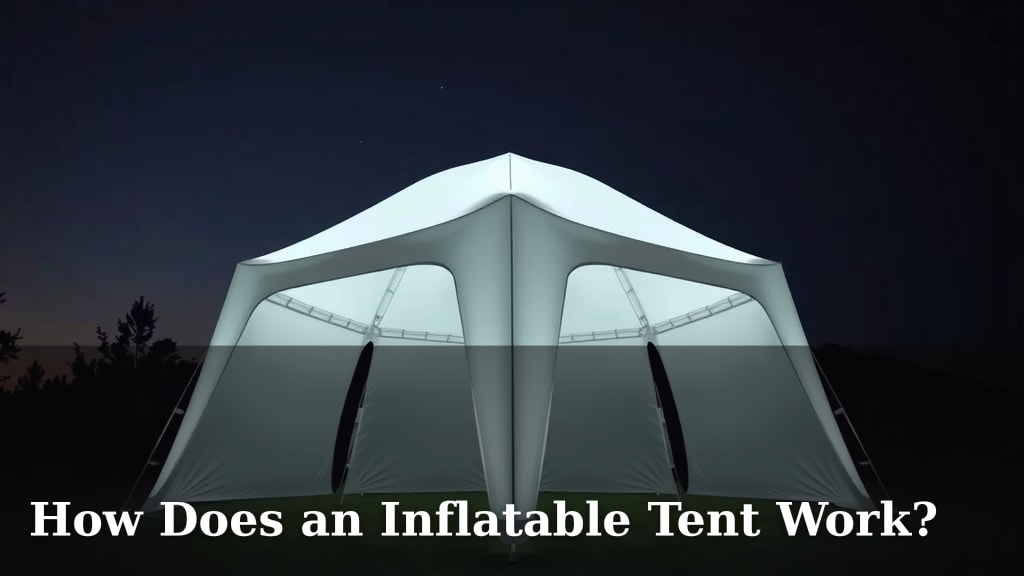
How Does an Inflatable Tent Work?
An inflatable tent works by using air pressure to set up its structure, replacing traditional poles. You simply pump air into special tubes, and they expand to form the tent’s shape. This makes setting up your campsite incredibly quick and easy.
Instead of fumbling with poles, you’re essentially inflating a sturdy air mattress for your shelter. We found that this system makes inflatable tents a popular choice for campers seeking convenience. They offer a surprisingly stable and durable shelter.
- Inflatable tents use air beams instead of poles.
- You inflate these beams with a pump.
- Air pressure creates the tent’s structure.
- This makes setup much faster.
Let’s walk through exactly how this innovative camping gear inflates and stands tall.
How the Magic of Air Creates Your Campsite Shelter
You might be wondering, how can air really hold up a tent? It sounds a bit like a magic trick, doesn’t it? Well, it’s not magic, but clever engineering that uses the power of air pressure. Think of it like a really sturdy, inflatable mattress. Instead of a metal frame, inflatable tents use air-filled tubes, often called air beams, to create their structure.
The Anatomy of an Inflatable Tent
Inside the fabric of your inflatable tent are these special tubes. They are usually made from a strong, durable material like TPU (thermoplastic polyurethane). This material is chosen for its ability to withstand pressure and resist punctures. These air beams are what replace the traditional tent poles you’d find in older tent designs. They run along the roof and sides of the tent, providing the support needed to keep it upright and stable.
The Inflation Process: What’s Really Happening?
When you start pumping air into the tent, you’re not just filling up a balloon. You’re actively creating a rigid structure. The air beams are designed to expand and become firm. This inflation process is quite efficient. You connect a pump to a specific valve on the tent. As you pump, air is forced into the beam. This air pushes outwards, making the beam expand and stiffen. Many models have a one-way valve to prevent air from escaping as you pump, which makes the job much easier.
Air Pressure: The Silent Supporter
The key to how these tents work is understanding air pressure. Air, when contained and pressurized, becomes quite strong. The air beams are sealed, and the pressure inside them is carefully managed. This internal pressure is what pushes outwards and creates the tent’s shape. It’s similar to how an inflatable kayak or paddleboard maintains its form. The pressure is distributed evenly, giving the tent its strength and stability against wind and weather.
Valves and Pumps: Your Inflation Tools
Most inflatable tents come with a specialized pump. These are often double-action pumps, meaning they push air into the beam on both the upstroke and the downstroke of the handle. This makes inflation much faster than a standard pump. The valves are usually high-flow, allowing air to enter quickly and efficiently. Some higher-end models even offer electric pumps, which can set up your tent in a matter of minutes with almost no effort on your part!
From Flat to Fantastic: The Setup Steps
Setting up an inflatable tent is a streamlined experience. First, you’ll unroll and lay out the tent fabric on your chosen campsite. You’ll then locate the inflation points, usually marked clearly on the tent. Connect your pump, and start inflating the main air beams. You’ll see the tent begin to take shape as the beams fill with air. Most tents have multiple beams that you inflate sequentially. Once all beams are inflated to the recommended pressure, you typically peg out the tent and tension any guy lines. It’s a surprisingly quick process, often taking under 10 minutes for many models.
Comparing Air Beams to Traditional Poles
It’s helpful to see how inflatable tents stack up against their pole-based counterparts. While poles have been the standard for decades, air beams offer distinct advantages that many campers find appealing.
The Pole Puzzle vs. The Air Advantage
Traditional tents rely on a series of interlocking poles. You have to connect these poles correctly, often in a specific order, and then thread them through sleeves or clip them to the tent fabric. This can be a time-consuming and sometimes frustrating process, especially if you’re setting up in windy conditions. You might also misplace a pole section or struggle to fit a pole into its sleeve. Inflatable tents bypass all of this complexity.
Speed and Simplicity
The primary benefit of inflatable tents is their setup speed. Instead of assembling multiple parts, you’re just pumping air. This makes them ideal for campers who want to spend more time enjoying their trip and less time wrestling with gear. It’s also a huge plus for families with young children who might not have the patience for a lengthy setup.
Durability and Flexibility
Many experts note that air beams can be surprisingly durable. While you might worry about punctures, the TPU material is very strong. In the event of a minor leak, many tents have multiple independent air chambers, so a small issue won’t cause the whole tent to collapse. Furthermore, air beams offer a slight flex that can help the tent withstand strong winds better than rigid poles, which can sometimes snap under extreme stress.
What About Deflation?
Deflating an inflatable tent is just as easy as setting it up. Most valves have a quick-release mechanism. You simply open the valve, and the air rushes out. You can then roll or fold the tent back up. While it might take a little practice to get it perfectly packed away, it’s still a far simpler process than disassembling and storing a tent full of poles.
Factors to Consider with Inflatable Tents
While inflatable tents offer many conveniences, it’s good to be aware of a few things.
Weight and Pack Size
Inflatable tents can sometimes be slightly heavier and bulkier than comparable pole tents. This is due to the reinforced fabric and the air beams themselves. However, technology is improving, and many manufacturers are working to reduce pack size and weight. You’ll want to check the specifications if you’re car camping versus backpacking.
Repair and Maintenance
Should an air beam get damaged, most tents come with a repair kit. This usually includes patches and adhesive, similar to what you might use for a punctured air mattress or inflatable raft. For more serious damage, you might need to contact the manufacturer. Many experts find that these repairs are often quite straightforward, especially for common issues like small punctures.
Cost
Inflatable tents can sometimes have a higher upfront cost compared to basic pole tents. This is often due to the innovative design and the specialized materials used. However, many campers feel the increased convenience and faster setup time justify the investment. When we looked at user reviews, the ease of use was consistently highlighted as a major selling point.

Is an Inflatable Tent Right for You?
If you value quick setup and ease of use, an inflatable tent is definitely worth considering. They are perfect for weekend campers, families, or anyone who wants to minimize the hassle of setting up camp. They offer a stable and comfortable shelter that can get you enjoying your vacation faster.
Quick Setup Checklist
- Unroll tent and find inflation points.
- Connect pump and inflate main air beams.
- Peg out the tent securely.
- Attach and tension guy lines.
- Enjoy your campsite!
Conclusion
You’ve learned that inflatable tents harness the power of air pressure, using durable air beams instead of traditional poles. This innovative design makes setup remarkably fast and simple, letting you spend more time enjoying the outdoors. While they might have a slightly different maintenance and cost profile, the convenience they offer is a major draw for many campers. If you’re looking for a quicker, easier way to get your campsite ready, an inflatable tent is certainly worth considering for your next adventure. Why not check out some models online today and see which one fits your camping style?
Frequently Asked Questions
Can an inflatable tent really withstand strong winds?
Yes, inflatable tents can be surprisingly sturdy in wind. The air beams offer a degree of flexibility that can absorb wind gusts better than rigid poles. Properly staked down with taut guy lines, your inflatable shelter can hold its own against the elements.
What happens if an air beam gets a puncture?
Most inflatable tents are designed with multiple independent air chambers. This means if one beam gets a small puncture, the rest of the tent will remain inflated, providing continued shelter. Repair kits are typically included for minor leaks, similar to fixing an inflatable mattress.
How much effort is actually required to inflate an inflatable tent?
Inflation requires physical effort, but it’s generally much less demanding than assembling complex pole structures. Double-action pumps make the process faster, and many campers find it takes just a few minutes of pumping. Electric pumps can do the job with almost no physical effort at all.
Are inflatable tents heavier than pole tents?
Sometimes, yes. The reinforced fabric and air beams can add a little weight and bulk compared to the lightest pole tents. However, manufacturers are continually working on making them lighter and more compact, so it’s always worth checking the specifications if weight is a concern.
How do you deflate an inflatable tent to pack it away?
Deflating is typically very straightforward. You simply open a quick-release valve on each air beam, and the air rushes out rapidly. You can then roll or fold the tent, much like a standard tent, to get it back into its carry bag.
![7 Best Tent Camping Washington [2026]](https://leonardhomeoutdoor.com/wp-content/uploads/2026/09/7-best-tent-camping-washington-2026-featured-768x432.jpg)