
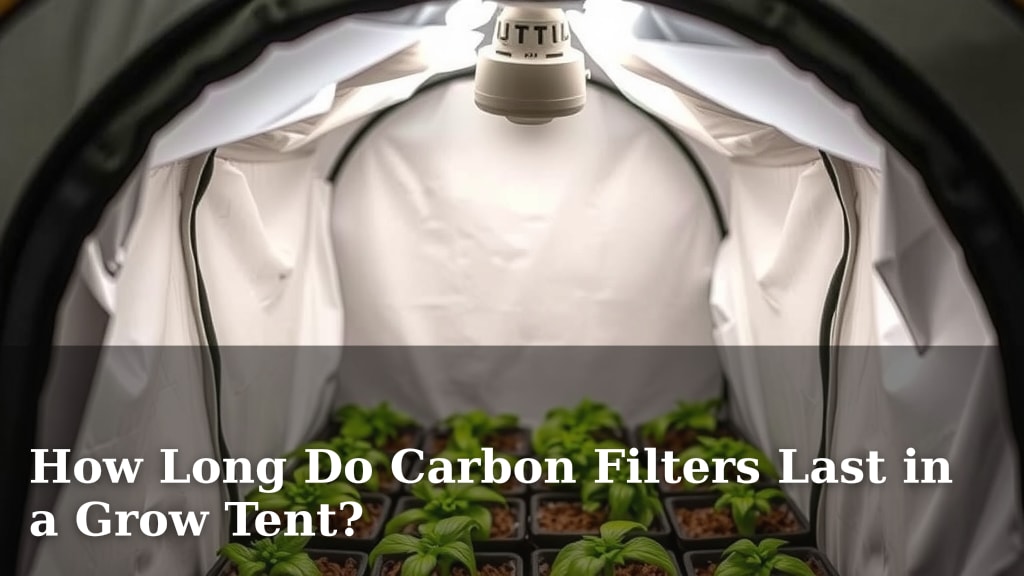
How Long Do Carbon Filters Last in a Grow Tent?
Your carbon filter for your grow tent typically lasts between 12 to 18 months, but this can vary quite a bit. The lifespan depends on how much air it’s filtering and the odor levels it’s working to control. Think of it like a sponge; the more it absorbs, the quicker it gets full.
When your filter starts to lose its effectiveness, you might notice a distinct smell creeping back into your grow space. Many growers find that regular maintenance and understanding the filter’s limitations can help you get the most out of it. We’ve researched common experiences to help you pinpoint when it’s time for a replacement.
- Carbon filters generally last 12-18 months.
- Factors like air volume and odor intensity affect lifespan.
- Signs of a failing filter include returning odors.
- Replacement ensures optimal air quality and odor control.
Let’s dive into what exactly impacts your carbon filter’s life and how to tell when it’s time for a fresh one.
Understanding Your Grow Tent Carbon Filter Lifespan
So, how long can you expect your carbon filter to keep your grow tent smelling fresh? Based on our research, most growers find their carbon filters last somewhere between 12 to 18 months. This is a good general range to keep in mind. However, several factors play a big role in this timeline. It’s not a one-size-fits-all situation.
What Exactly is a Carbon Filter Doing?
Think of your carbon filter as the bouncer at the door of your grow tent. Its main job is to capture those potent odors. It does this by using activated carbon. This carbon has a porous surface. This surface traps odor molecules as air passes through it. The more air that passes, and the stronger the smells are, the more the carbon gets “full.”
The Science Behind the Smell Capture
Activated carbon is treated to be incredibly porous. This means it has a huge surface area packed into a small space. When volatile organic compounds (VOCs) – that’s the fancy term for odor molecules – come into contact with the carbon, they get stuck. This process is called adsorption. It’s like tiny magnets pulling the smell particles onto the carbon.
When the “Magnets” Start to Lose Their Stick
Over time, these adsorption sites on the carbon get filled up. Once they’re full, they can’t trap new odor molecules as effectively. This is when you’ll start noticing smells escaping your grow tent. It’s a gradual process, not usually an abrupt change.
Key Factors Affecting Filter Longevity
You’re probably wondering what makes one filter last longer than another. We’ve found a few main culprits that really impact how quickly your filter reaches the end of its useful life. Understanding these can help you manage your expectations and plan for replacements.
Airflow Volume: The More Air, The More Work
The primary driver of filter wear is the volume of air it processes. A fan running at a high CFM (Cubic Feet per Minute) will move more air through the filter. This means the carbon will be exposed to more odor molecules more quickly. If you have a powerful fan or run it constantly at high speed, expect a shorter lifespan.
- High CFM fan = More air processed = Faster saturation.
- Low CFM fan = Less air processed = Slower saturation.
Odor Intensity: The Strength of the Smell Matters
This one’s pretty intuitive. If your plants are producing really strong odors, your filter has a tougher job. Think about trying to scrub out a tough stain versus a light smudge. The stronger the smell, the more molecules the carbon has to grab onto. Some plants are naturally smellier than others, and the stage of growth also plays a role.
During Flowering: Peak Odor Production
Many growers report that the odor gets significantly stronger when plants are in their flowering stage. This is when your carbon filter is working overtime. You might notice your filter doesn’t last as long if you’re primarily focused on its performance during this crucial time.
Filter Quality and Size: Not All Filters Are Created Equal
Just like anything else, the quality of the carbon and the construction of the filter matter. Higher-quality filters often use more premium activated carbon. They might also have a thicker bed of carbon. A larger filter, meaning one with a higher CFM rating, will typically last longer than a smaller one for the same amount of airflow. This is because there’s more carbon material to do the work.
Choosing the Right Size for Your Fan
It’s essential to match your filter’s CFM rating to your fan’s CFM rating. If your filter is undersized for your fan, it will be overworked and clog faster. If it’s oversized, it might not be as efficient. Many experts recommend having a filter rated for at least 1.5 times your fan’s CFM to ensure optimal performance and longevity (Grower’s Handbook).
Environmental Factors: Dust and Humidity
Beyond just odors, other things can impact your filter. Dust and other particulate matter in the air can clog the filter’s pores. This reduces airflow and its ability to capture smells. High humidity can also affect the carbon’s performance over time. Keeping your grow tent clean and managing humidity levels can help extend the life of your filter.
Signs Your Carbon Filter Needs Replacing
How do you know for sure it’s time for a new filter? Your nose is often the best indicator! But there are other subtle signs to watch out for. Catching these early means you can replace the filter before odors become a problem.
The Obvious: Smells Are Leaking Out
This is the most straightforward sign. If you start smelling your plants outside of your grow tent, your filter is no longer doing its job effectively. Don’t wait too long once you notice this. The goal is complete odor containment.
Reduced Airflow: A Sluggish Fan?
While a dirty pre-filter is the most common cause of reduced airflow, a saturated carbon filter can also restrict air movement. If your fan seems to be struggling, and you’ve cleaned or replaced the pre-filter, the carbon filter itself might be the bottleneck.
Noise Changes: Is Your Fan Louder?
Sometimes, when a filter becomes heavily clogged with dust or saturated, your fan might have to work harder to pull air through it. This can sometimes result in your fan sounding louder or strained. It’s a good cue that something in your ventilation system might need attention.
Filter Age: A Matter of Months, Not Years
Even if you don’t notice strong smells, carbon filters have a finite lifespan based on the amount of carbon. After that 12-18 month mark, the adsorption sites are simply used up. Many growers find it helpful to simply mark the installation date on the filter.
Here’s a quick checklist to help you keep track:
- Mark Installation Date: Write the date you installed the filter on the filter itself.
- Regular Smell Checks: Do a quick sniff test around your tent periodically.
- Monitor Airflow: Notice if your fan’s airflow seems to decrease.
- Pre-Filter Maintenance: Ensure your pre-filter is clean; this protects the carbon.
- Listen to Your Fan: Unusual noises could indicate a struggling filter.
- Consider Your Grow Cycle: If you’re entering peak flower, be extra vigilant.
Conclusion
You’ve learned that your grow tent’s carbon filter typically lasts 12 to 18 months. Remember, this isn’t a hard and fast rule. Airflow volume, odor intensity, filter quality, and even environmental dust all play a role. By paying attention to your senses – especially your nose – and monitoring airflow, you can tell when it’s time for a change. Don’t wait for strong smells to escape! Your best next step is to check the installation date on your current filter. If it’s nearing that 12-18 month mark, or you’re noticing any signs of reduced effectiveness, it’s time to plan for a replacement to keep your grow space fresh and discreet.
Frequently Asked Questions
How often should I clean my carbon filter?
You don’t actually clean the activated carbon itself. Instead, focus on cleaning or replacing the pre-filter wrap. This wrap catches dust and debris before it reaches the carbon. Cleaning this pre-filter regularly, perhaps every 1-3 months, will help protect your carbon filter and extend its life.
Can I use a carbon filter that’s rated for a higher CFM than my fan?
Yes, it’s often recommended to have a carbon filter with a CFM rating that’s higher than your fan’s CFM. Many experts suggest a rating at least 1.5 times your fan’s CFM. This prevents the filter from being overworked, ensuring better airflow and a longer lifespan for the carbon.
What happens if I don’t replace my carbon filter when it’s old?
If you don’t replace your saturated carbon filter, you’ll start to notice odors escaping your grow tent. The activated carbon will be full and unable to adsorb new odor molecules. This means your primary defense against smells is gone, which can lead to unwanted attention.
Is there a way to “reactivate” an old carbon filter?
Unfortunately, no. Once the adsorption sites on the activated carbon are filled with odor molecules, they cannot be effectively reactivated for home use. While industrial processes exist, for growers, replacement is the only practical solution for restoring odor control.
How important is the pre-filter for my carbon filter’s lifespan?
The pre-filter is extremely important for your carbon filter’s lifespan. It acts as a barrier against dust, pollen, and other particulates. Without a clean pre-filter, these particles will clog the carbon’s pores, reducing airflow and its ability to capture odors, ultimately shortening its effective life.
![7 Person Tent For Camping [2026]](https://leonardhomeoutdoor.com/wp-content/uploads/2026/08/7-person-tent-for-camping-2026-featured-768x432.jpg)

![7 Best Product To Waterproof Tent [2026]](https://leonardhomeoutdoor.com/wp-content/uploads/2026/09/7-best-product-to-waterproof-tent-2026-featured-768x432.jpg)
![7 Best Tarp For Under Tent [2026]](https://leonardhomeoutdoor.com/wp-content/uploads/2026/09/7-best-tarp-for-under-tent-2026-featured-768x432.jpg)