Inflatable Tent vs Pop Up Tent: Which is Right for You
Choosing between an inflatable tent and a pop-up tent depends on what you need most. For the quickest setup, a pop-up tent is your winner, often going up in seconds. Inflatable tents, while slower, offer superior stability and more spacious interiors, especially in windy conditions.
Both tent types aim to make camping easier. Pop-up tents are designed for ultimate speed. Inflatable tents use air beams instead of poles for a different kind of ease. Many campers want to know which one is truly better for their next outdoor adventure.
- Pop-up tents are super fast to set up.
- Inflatable tents offer better wind resistance and space.
- Consider your setup speed needs.
- Think about weather conditions and how much room you want.
Let’s break down the key differences so you can pick the perfect tent for your needs.
“`htmlComparing Air Beam Tents and Instant Setup Shelters
You’re looking to upgrade your camping game with a tent that’s easier to pitch. That’s where inflatable and pop-up tents come in. They promise less hassle and more time enjoying the outdoors. But they do it in very different ways. Understanding these differences will help you choose the right one for your adventures.
We’ve broken down what makes each tent type stand out. We looked at setup speed, durability, space, and overall camping experience. Let’s dive in and see which one fits your camping style best.
The Speed Factor: How Fast Can You Set Up?
When we talk about speed, one type of tent is the undisputed champion. If you want to be set up and relaxing in minutes, you’ll want to consider this option very carefully.
Pop-Up Tents: The “Seconds to Seconds” Setup
Pop-up tents are designed for ultimate speed. They often have pre-attached poles that spring into place. You literally toss them, and they almost set themselves up. It’s pretty amazing to witness.
Many pop-up tents can be pitched in under 10 seconds. Seriously. You might need a few extra moments to stake them down, but the main structure is up almost instantly. This is fantastic for.
- Quick overnight stops.
- Setting up camp after a long drive.
- Campers who dislike fiddly pole assembly.
Inflatable Tents: A Little More Patience Required
Inflatable tents don’t have traditional poles. Instead, they use air beams. You typically connect a pump and inflate these beams. This process takes longer than a pop-up, but it’s still easier than wrestling with lots of poles.
Expect to spend 5 to 15 minutes inflating and staking an inflatable tent. Some larger models might take a bit longer. While not as fast as a pop-up, it’s still a much simpler setup than a standard tent. This makes them a great middle ground.
Stability and Weather Resistance: What Can They Handle?
When the weather turns, you want a tent that can stand firm. Both types offer advantages, but one generally has a leg up in windy conditions.
Inflatable Tents: The Wind Whisperers
The air beams in inflatable tents are surprisingly strong. They flex and absorb wind rather than fighting it. This often makes them more stable in high winds than pop-up tents with their more rigid frames.
The rounded shapes common in inflatable designs also help. They allow wind to pass over them more easily. Many users report that their inflatable tents handle gusts better. This is a big plus for peace of mind.
Pop-Up Tents: Good, But Potentially Less Stable
Pop-up tents are generally designed for fair weather. Their quick-setup frames can be more susceptible to damage from strong winds. If the wind is really blowing hard, the poles could bend or break.
While you can stake them down securely, their design is often less aerodynamic. For car camping in predictable weather, they’re usually fine. But if you anticipate challenging conditions, you might want to look elsewhere.
Space and Comfort: Living Large (or Small)
How much room do you need inside your tent? This is a major factor for comfort during your trip. Think about how you’ll use the space.
Inflatable Tents: Room to Roam
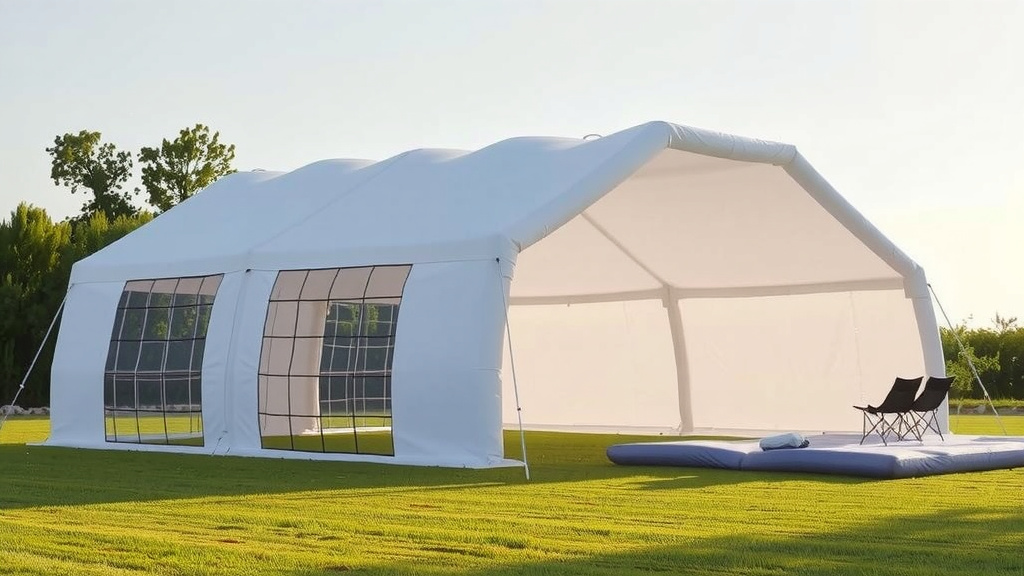
Inflatable tents often have a more vertical interior. Because the air beams are smooth and rounded, they don’t intrude on your headroom as much as traditional poles. This gives them a feeling of spaciousness.
Many inflatable models offer generous living space. You can often stand up fully inside. This makes a huge difference for changing clothes, organizing gear, or just relaxing on a rainy day. It feels less like a tent and more like a small room.
Pop-Up Tents: Cozy and Functional
Pop-up tents tend to be more compact. Their designs are often lower to the ground to maximize stability and minimize wind resistance. This can mean less headroom inside.
While functional for sleeping and basic shelter, they might feel a bit cramped if you’re spending a lot of time inside. They are perfect for simply sleeping and storing gear. For those who prioritize sleeping space and minimal fuss, they are a solid choice.
Ease of Use: Beyond Just Setup Speed
Ease of use isn’t just about how quickly you can pitch a tent. It’s also about packing it away and the general experience.
Packing Up: The Real Test
Packing up a pop-up tent can be a learning curve. They often fold down into a compact disc shape, which requires a specific technique. It might take a few tries to get it right. Some people find it frustrating.
Inflatable tents are generally easier to pack away. You deflate them, roll them up, and stuff them into their bags. It’s a more intuitive process. You don’t need to fight the tent into submission like you might with a pop-up.
Durability and Repairability
Both tent types have pros and cons regarding durability. Pop-up tents rely on fiberglass poles, which can snap. If a pole breaks, it can be tricky to repair on the spot.
Inflatable tents use air bladders. These can be punctured, but most come with a repair kit. Many air beams are also replaceable, making repairs easier than with broken poles. However, extreme temperatures can affect air pressure (National Park Service).
Weighing Your Options: A Quick Comparison
To help you visualize the differences, here’s a table:
| Feature | Inflatable Tent | Pop-Up Tent |
|---|---|---|
| Setup Speed | 5-15 minutes | Seconds (under 10) |
| Wind Resistance | Excellent; flexible beams absorb wind | Good; can be less stable in high winds |
| Interior Space | Spacious; good headroom | More compact; less headroom |
| Packing Up | Easier deflation and rolling | Can be tricky to fold correctly |
| Durability | Puncture risk; repairable bladders | Pole snap risk; harder to repair |
| Cost | Generally higher | Generally lower |
Your Checklist for Choosing the Right Tent
Before you make your final decision, ask yourself these questions:
- How important is setup speed above all else?
- Do you often camp in windy or challenging weather?
- How much interior space do you need to be comfortable?
- Are you comfortable with a slightly more involved packing process?
- What’s your budget for a new tent?
- How much gear do you typically bring, and where will it go?
Answering these will guide you toward the tent that will make your next camping trip a breeze. Both are fantastic options for making camping easier, but they excel in different areas.
“`Conclusion
You’ve seen how inflatable and pop-up tents offer different camping experiences. Pop-up tents win for lightning-fast setup, perfect for quick trips. Inflatable tents provide superior stability in wind and more comfortable interior space. Consider your typical camping conditions and what matters most to you. If you’re always on the go and speed is key, a pop-up is your go-to. For more relaxed trips where comfort and weather resilience are priorities, an inflatable tent might be your better bet. Now that you know the differences, you’re ready to pick the tent that will make your next outdoor adventure a success!
Frequently Asked Questions
Can I use an inflatable tent in cold weather?
Yes, inflatable tents can be used in cold weather. The air beams can actually help insulate your tent. Just be aware that extreme cold might slightly reduce air pressure, so a quick top-up might be needed.
Are pop-up tents durable enough for regular camping?
For fair-weather camping and occasional use, pop-up tents are generally durable. However, their pole systems can be more prone to damage from strong winds or rough handling compared to inflatable tents.
How do I repair a puncture in an inflatable tent?
Most inflatable tents come with a repair kit that includes patches and adhesive. You’ll clean the area around the puncture, apply the adhesive, and stick on a patch. It’s usually a straightforward process to get you back camping.
Which type of tent is easier to pack away for storage?
Generally, inflatable tents are easier to pack away. You just deflate them, roll them up, and put them in the bag, which is typically more intuitive than the folding technique required for pop-up tents.
Are inflatable tents more expensive than pop-up tents?
Inflatable tents tend to be more expensive upfront. This is often due to the specialized materials and the air beam system. Pop-up tents are usually more budget-friendly and a great option for beginners or those on a tighter budget.
![7 Best Pop Up Tents For The Beach [2026]](https://leonardhomeoutdoor.com/wp-content/uploads/2026/09/7-best-pop-up-tents-for-the-beach-2026-featured-768x432.jpg)
![7 Best Hot Tent Pellet Stove [2026]](https://leonardhomeoutdoor.com/wp-content/uploads/2026/08/7-best-hot-tent-pellet-stove-2026-featured-768x432.jpg)
![7 Best Clamshell Roof Top Tent [2026]](https://leonardhomeoutdoor.com/wp-content/uploads/2026/08/7-best-clamshell-roof-top-tent-2026-featured-768x432.jpg)