
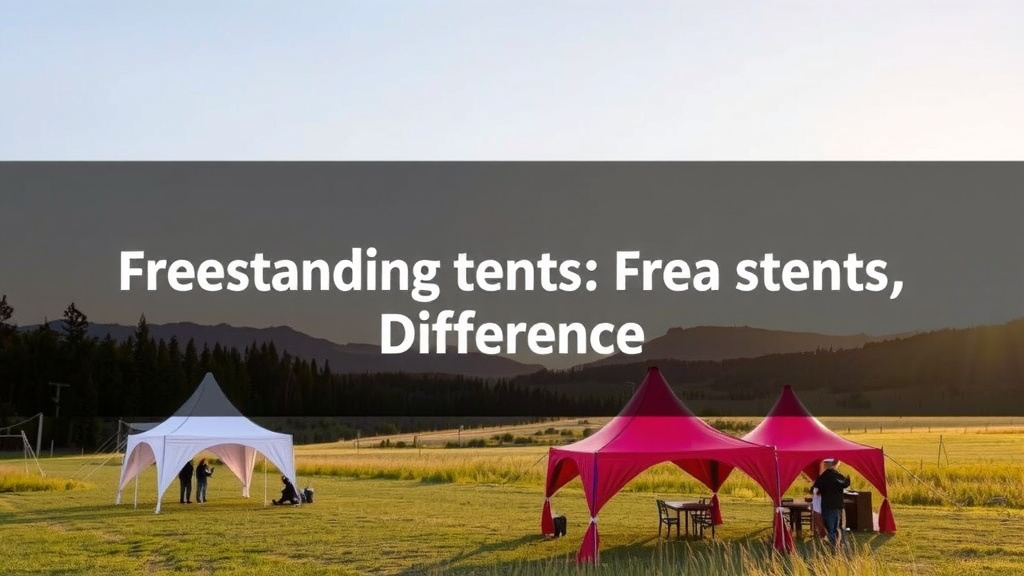
Freestanding vs Non-Freestanding Tents: What’s the Difference
When choosing camping gear, understanding the difference between freestanding tents and non-freestanding tents is key. A freestanding tent sets up without needing stakes and can be moved around easily. This makes them the more versatile and user-friendly option for many campers, especially beginners.
Freestanding tents rely on their pole structure for stability, meaning they can stand on their own once assembled. Non-freestanding tents, on the other hand, require stakes and guy lines to maintain their shape and stability. Many campers find the convenience of freestanding a major advantage for quick setups and campsite adjustments.
- Freestanding tents don’t need stakes to stand up.
- They are easier to pitch on various surfaces.
- Non-freestanding tents require stakes and guy lines.
- Non-freestanding tents can be lighter and more compact.
Let’s dive into the specifics of each type to help you decide which is the best fit for your next outdoor adventure.
Freestanding vs. Non-Freestanding: Which Tent is Right for You?
Choosing the right tent can make or break your camping trip. You’ve probably heard the terms “freestanding” and “non-freestanding” when researching tents. But what’s the real difference? And which one should you pack for your next adventure? Let’s break it down.
Understanding Freestanding Tents
Imagine setting up camp on a rocky beach or a wooden platform. A freestanding tent is your best friend in these situations. It’s designed to hold its shape on its own, without needing any stakes pounded into the ground.
How Freestanding Tents Work
The magic behind a freestanding tent lies in its pole structure. These tents come with flexible poles that crisscross and connect to the tent body and fly. Once you insert the poles into their sleeves or clip them on, the tent pops into shape. It’s like a self-supporting dome. This means you can literally pick it up and move it to find the perfect spot before staking it down.
The Pole System Explained
Most freestanding tents use a few key poles. You’ll typically find a main set of poles that create the primary structure, giving the tent its height and width. Sometimes, there are additional shorter poles for vestibules or to add extra support. The way these poles are engineered is what provides the tent’s stability.
Advantages of Freestanding Tents
One of the biggest perks is ease of setup. You don’t need to be an expert camper to get a freestanding tent up. You can pitch it quickly, which is fantastic after a long day of hiking or when bad weather rolls in. Plus, you have the flexibility to adjust its position before fully securing it.
Pitching on Any Surface
This is where freestanding tents truly shine. You can set them up on hard ground like gravel or sand, on wooden decks, or even on rocky terrain where staking is difficult or impossible. You just need to find a reasonably flat spot. This makes them super versatile for various camping locations.
Disadvantages of Freestanding Tents
While convenient, freestanding tents often come with a higher price tag. The sophisticated pole structure and more robust fabrics can add to the cost. They can also be a bit heavier and bulkier to pack compared to some non-freestanding models, which might be a consideration for backpackers focused on ultralight gear.
Exploring Non-Freestanding Tents
Non-freestanding tents rely on external support to stay upright and stable. Think of them as needing a helping hand from the ground – specifically, stakes and guy lines.
How Non-Freestanding Tents Stay Up
These tents have a simpler pole structure, often just a few poles to create the basic shape. The real work is done by stakes driven into the ground and guy lines (ropes) that attach to the tent and are anchored with stakes. These lines pull the tent fabric taut, giving it its form and keeping it secure against wind.
The Role of Stakes and Guy Lines
Without stakes, a non-freestanding tent will likely collapse. The stakes anchor the tent to the ground, providing a solid base. Guy lines extend outwards from the tent, creating tension. This tension is what keeps the tent walls from sagging and helps it withstand wind. You’ll often find multiple guy-out points on these tents for maximum stability.
Advantages of Non-Freestanding Tents
One of the most appealing aspects is their lighter weight and smaller packed size. Because they use fewer poles and often thinner materials, they can be a great choice for backpackers who need to conserve every ounce and inch of space. They can also be more affordable than their freestanding counterparts.
Potential for Greater Strength
When pitched correctly, non-freestanding tents can be incredibly strong and stable. The tautness achieved through well-placed stakes and guy lines can make them perform exceptionally well in high winds. Some experienced campers prefer them for this very reason, especially in exposed, windy conditions.
Disadvantages of Non-Freestanding Tents
The main drawback is their setup dependency. You absolutely need to stake them out. This means they aren’t ideal for surfaces like rock, sand, or wooden platforms. Setting them up can also take a bit more practice and time, especially in less-than-ideal weather. You need to find a suitable spot to anchor them effectively.
Key Differences at a Glance
Let’s summarize the main distinctions to help you see them side-by-side. This comparison can guide your decision-making process.
| Feature | Freestanding Tent | Non-Freestanding Tent |
|---|---|---|
| Setup | Self-supporting; doesn’t require stakes to stand. | Requires stakes and guy lines for stability. |
| Surface Versatility | Excellent for various surfaces (rock, sand, wood, hard ground). | Best for soft ground where stakes can be driven securely. |
| Ease of Use | Generally easier and faster to pitch. | May require more practice and time to set up properly. |
| Weight/Bulk | Often heavier and bulkier due to more poles. | Typically lighter and more compact. |
| Cost | Can be more expensive. | Often more affordable. |
| Wind Performance | Good, but requires proper staking and guy lines. | Can be exceptionally strong when pitched correctly. |
Which Tent Type Suits Your Camping Style?
Think about where you typically camp. Do you love car camping at established sites with soft ground? Or are you the type to explore remote areas where staking might be tricky?
If you’re new to camping or prioritize convenience and flexibility, a freestanding tent is likely your best bet. They are forgiving and easy to manage, making your first few trips much more enjoyable. They are also great for campers who like to move their tent around the campsite to find the best view or shade.
On the other hand, if you’re a seasoned backpacker counting every gram and ounce, or if you often camp in areas known for high winds where you can securely stake your tent, a non-freestanding option might be more appealing. They offer a great balance of performance and packability for those who need it.
Quick Checklist for Your Tent Decision
To help solidify your choice, consider these points:
- How important is easy setup for you?
- What kinds of terrain do you usually camp on?
- What’s your budget for camping gear?
- How much weight and space can you afford in your pack?
- Do you often camp in windy conditions?
- Are you comfortable with guy lines and proper staking techniques?
Conclusion
Choosing between freestanding and non-freestanding tents depends entirely on your camping style. Freestanding tents offer unmatched ease of setup and surface versatility, making them perfect for beginners or those who value convenience. They are your go-to for quick pitching on rocky beaches or festival grounds. On the flip side, non-freestanding tents win for ultralight backpackers and seasoned campers who prioritize minimal weight and can master efficient staking techniques. They can provide incredible stability in windy conditions when pitched correctly. Consider your typical camping environment and priorities to make the best choice for your next adventure.
Frequently Asked Questions
Can I use stakes with a freestanding tent?
Yes, absolutely! While freestanding tents don’t *require* stakes to stand, using them will significantly improve their stability, especially in windy conditions. Stakes help anchor your tent securely to the ground, preventing it from shifting. It’s always a good idea to stake out your freestanding tent, even if it’s just for added peace of mind.
Are non-freestanding tents really that much lighter?
Generally, yes, non-freestanding tents are designed to be lighter. They often use fewer poles and less fabric because they rely on stakes and guy lines for structural support. This reduction in materials can translate to a noticeable difference in your backpack, which is a big plus for long-distance hikers and backpackers counting every ounce.
Which type of tent is better for car camping?
For car camping, a freestanding tent is often the better choice. You typically have more space and don’t need to worry as much about weight and packability. The ease of setup and the ability to pitch it almost anywhere (like on gravel or packed earth) makes car camping more relaxed. You can also easily move a freestanding tent once it’s set up if you decide you don’t like the spot.
What happens if I try to set up a non-freestanding tent on hard ground?
If you try to set up a non-freestanding tent on hard ground, like rock or concrete, without being able to stake it, it simply won’t stand up properly. The tent’s shape is maintained by the tension created by the stakes and guy lines pulling the fabric taut. Without secure anchors, the tent will likely collapse. You would need to find alternative ways to secure it, like using heavy rocks or sandbags, which aren’t always practical.
Is a freestanding tent always more expensive than a non-freestanding one?
Typically, freestanding tents tend to be more expensive. The more complex pole structure, the engineering that goes into making them self-supporting, and sometimes the materials used can increase manufacturing costs. Non-freestanding tents, with their simpler design and reliance on external anchoring, can often be found at a more budget-friendly price point.
![7 Best Places To Tent Camp In California [2026]](https://leonardhomeoutdoor.com/wp-content/uploads/2026/09/7-best-places-to-tent-camp-in-california-2026-featured-768x432.jpg)

![7 Person Instant Tent [2026]](https://leonardhomeoutdoor.com/wp-content/uploads/2026/08/7-person-instant-tent-2026-featured-1-768x432.jpg)